
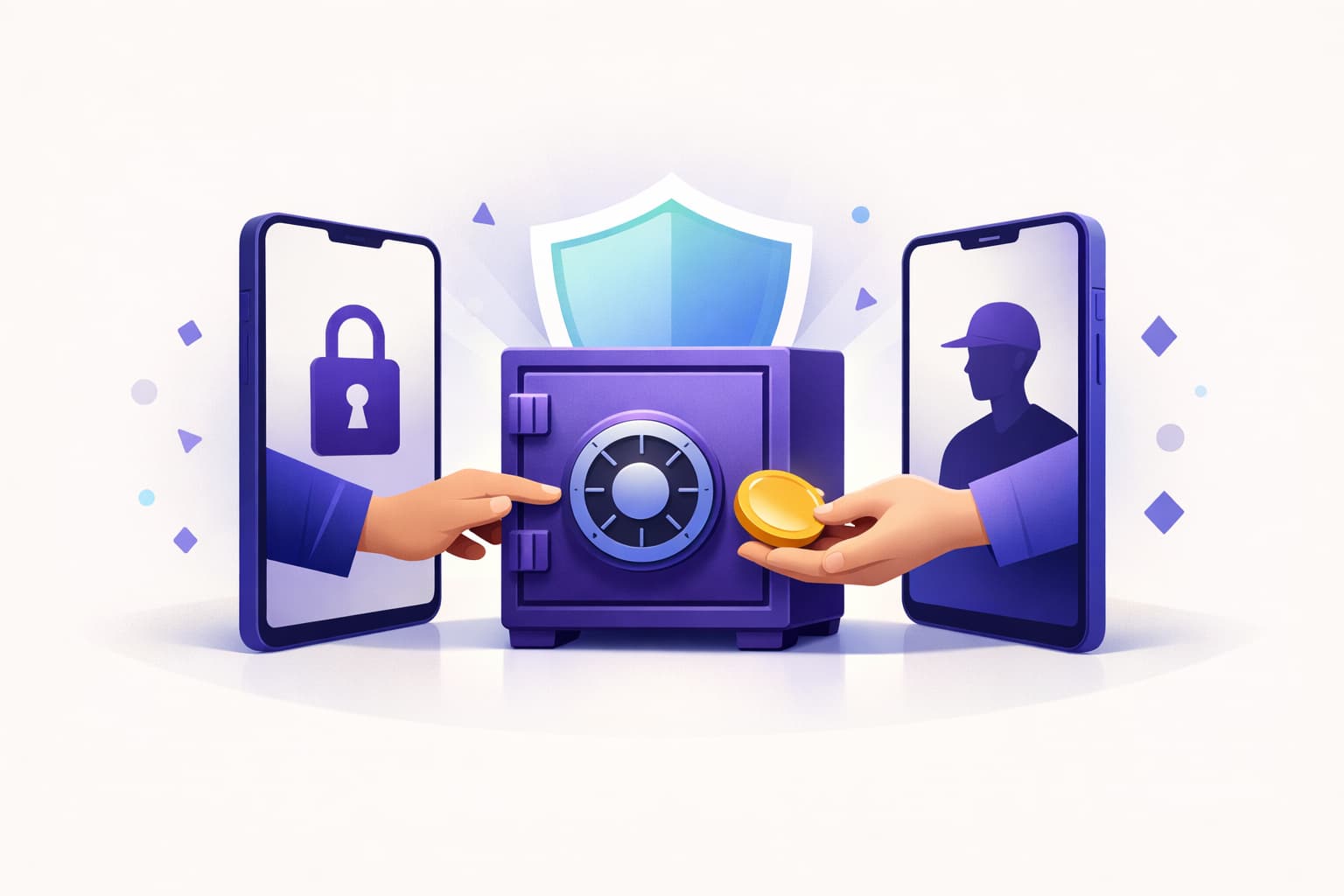
trust protect for Secure Peer-to-Peer Transactions
Understand how trust protect helps buyers and sellers complete higher-value transactions with a secure, structured, Stripe-powered payment flow.
trust protect for Secure Peer-to-Peer Transactions
trust protect is a practical way to make peer-to-peer transactions safer when buyers and sellers do not know each other. It adds structure, identity checks, documented milestones, and a secured payment flow powered by Stripe. Instead of relying on informal promises, both parties follow a clear process designed to reduce fraud, disputes, and misunderstandings. That matters most for higher-value sales, remote transactions, and custom deliverables.
What trust protect means in online transactions
At its core, trust protect means adding a neutral technical layer between a buyer and a seller during a transaction. That layer does not replace the parties' agreement, but it helps organize the process so each step is documented and easier to verify.
In many peer-to-peer deals, risk appears because the transaction is informal. Messages are scattered across apps, expectations are vague, and there is no structured sequence for payment, delivery, inspection, or approval.
A trust-based transaction framework solves that by standardizing the flow. It creates a clearer path from offer to completion, especially when the item is expensive, customized, shipped internationally, or sold between strangers.
Typical elements of trust protect include:
- participant identification and account verification
- a documented description of the item or service
- agreed transaction milestones
- a secured payment flow
- evidence trails for communication and validation
- a defined process for completion or dispute handling
This is why structured intermediation matters. It lowers ambiguity before money changes hands and gives both sides a more reliable framework for proving what was agreed.
For buyers, that means stronger visibility into what they are paying for. For sellers, it means a more serious transaction environment where the buyer has committed to a defined process instead of making informal promises.
A common misunderstanding is to assume that any secure transaction platform is a financial institution. In this model, payment services are provided by Stripe, while the platform itself acts as a technical intermediation layer that helps coordinate the transaction journey.
Why informal deals fail so often
Informal transactions usually fail for predictable reasons:
- the product description was incomplete
- the delivery timeline was never fixed
- one party changed terms mid-process
- payment happened too early or without traceability
- there was no agreed inspection or acceptance step
When these gaps exist, even honest parties can end up in conflict. A structured process makes those weak points visible before they become expensive problems.
How trust protect works step by step
The value of trust protect is easiest to understand as a sequence. Instead of sending money directly and hoping for the best, both parties move through a controlled process with clear checkpoints.
A typical transaction flow looks like this:
- The buyer and seller define the item, service, price, and conditions.
- The seller provides supporting details such as photos, specifications, serial numbers, or scope documents.
- The parties confirm delivery, inspection, or milestone rules.
- Payment is initiated through payment services provided by Stripe.
- The item is shipped, delivered, or the service milestone is completed.
- The buyer validates conformity based on the agreed terms.
- The transaction is completed according to the documented process.
This structure matters because each stage creates evidence. If a disagreement appears, there is a transaction record rather than a vague message thread.
For physical goods, the process often includes shipping proof, condition evidence, and a buyer review window. For services, it may include milestone definitions, deliverable uploads, revision rules, and acceptance criteria.
The system works best when both parties are specific. A listing that says “good condition” is weak. A listing that includes model number, age, defects, accessories, delivery method, and inspection expectations is much stronger.
That is why a technical intermediation platform should encourage precision. Better inputs create better transaction outcomes.
Below is a simplified comparison between an informal deal and a structured trust protect flow:
| Transaction method | Informal direct deal | trust protect flow |
|---|---|---|
| Identity visibility | Limited | Higher through verification steps |
| Payment path | Direct and often irreversible feeling | Secured payment flow via Stripe |
| Terms documentation | Fragmented across messages | Structured and centralized |
| Delivery validation | Often unclear | Defined checkpoints |
| Dispute readiness | Weak evidence | Better traceability |
| Suitability for high-value deals | Risky | More appropriate |
What buyers should confirm before starting
Buyers should verify several points before entering the transaction:
- the exact item or service scope
- the total price and any shipping costs
- the expected timeline
- what counts as acceptable condition or completion
- what evidence the seller must provide
The more specific the agreement, the lower the chance of conflict later.
What sellers should prepare in advance
Sellers benefit from preparing a complete transaction file:
- accurate descriptions
- dated photos or videos
- proof of ownership when relevant
- shipping method and tracking details
- milestone definitions for service work
This reduces delays and shows professionalism, which can increase buyer confidence.
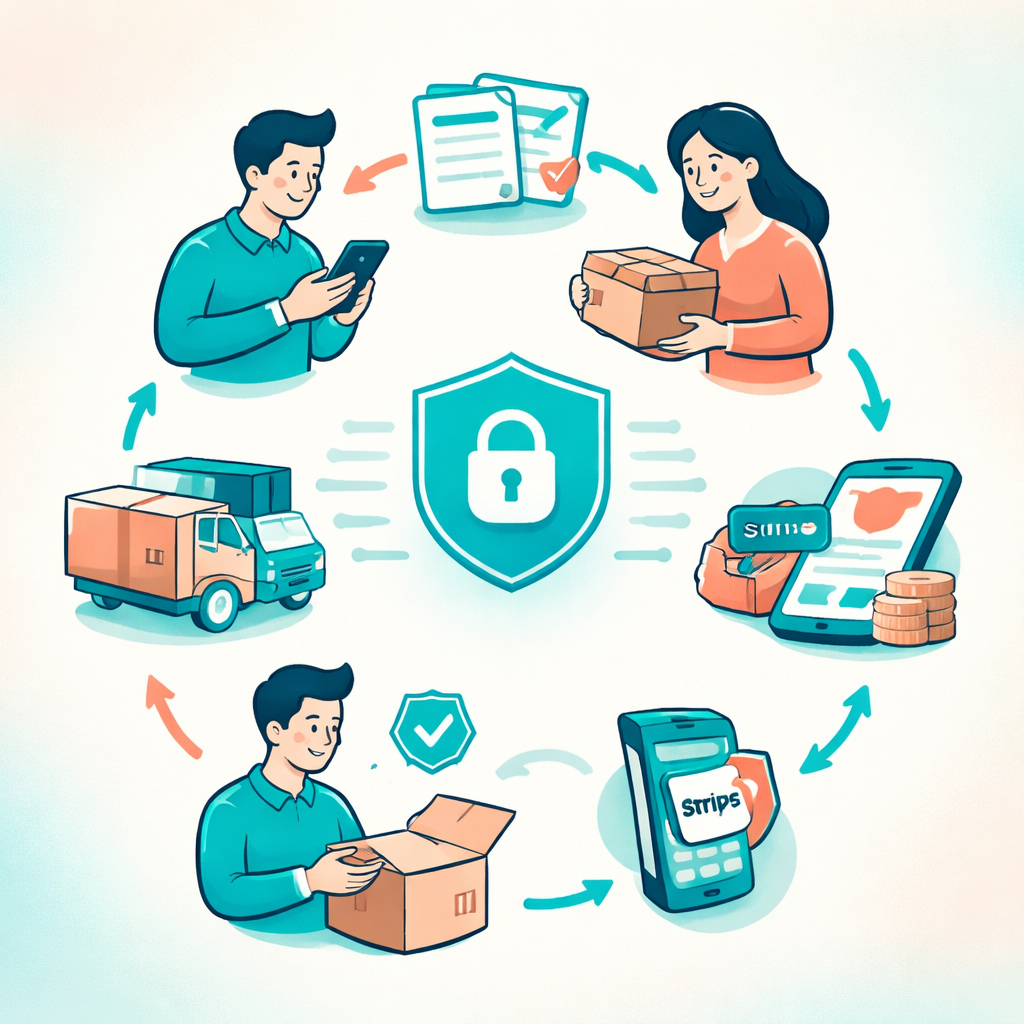
Illustration pour "How trust protect works step by step"
Why trust protect matters for buyers
For buyers, the biggest risk in peer-to-peer commerce is paying for something that never arrives or does not match the description. trust protect reduces that risk by requiring a more structured process and a better evidence trail.
That does not mean every transaction becomes risk-free. It means the buyer is no longer relying only on screenshots, verbal assurances, or social profile impressions.
Buyer benefits typically include:
- clearer transaction terms before payment
- better visibility into seller identity and documentation
- a more traceable payment path
- defined delivery or milestone validation steps
- stronger records if a problem needs review
This is especially important in categories where counterfeit goods, hidden defects, or non-delivery are common. A structured process helps buyers ask the right questions before committing.
For example, when purchasing a used high-end watch, a buyer should not rely only on a few photos and a chat promise. The transaction should include reference details, condition notes, accessory list, shipping method, and inspection expectations.
Another advantage is psychological. When a seller accepts a structured process, it often signals seriousness and willingness to be transparent. Fraudsters tend to prefer speed, pressure, and informal payment behavior.
A buyer can use trust protect most effectively by following a checklist:
- compare the listing details with the seller's evidence
- ask for missing specifications before paying
- confirm what happens if the item differs materially
- keep all communication inside the documented process when possible
- inspect quickly and accurately once delivery occurs
The buyer's role is not passive. Good outcomes depend on timely review and precise communication.
If a transaction involves services rather than goods, the same logic applies. The buyer should define deliverables, deadlines, revision limits, and approval criteria in advance. Vague service agreements create the same problems as vague product listings.
Best use cases for buyers
Buyers gain the most value from a structured transaction flow when purchasing:
- high-value second-hand items
- custom-made products
- remote freelance services
- items shipped across borders
- collectibles with authenticity concerns
In these cases, documentation and milestone control are often more important than speed.
Why trust protect matters for sellers
Sellers also face real risk in peer-to-peer transactions. They may deal with non-serious buyers, chargeback concerns, false claims about item condition, or last-minute attempts to renegotiate after delivery.
trust protect helps sellers by creating a more disciplined environment. Buyers commit to a defined process, and the seller can document what was offered, shipped, and completed.
Key seller benefits include:
- clearer proof of what was agreed
- stronger documentation of item condition or service scope
- reduced confusion around deadlines and delivery
- better transaction seriousness from buyers
- a more professional framework for higher-value sales
This is particularly useful for independent sellers who operate without a full e-commerce infrastructure. Instead of improvising each deal, they can rely on a repeatable process that improves consistency.
For service providers, milestone logic is often the most valuable part. Rather than debating whether “the work is done,” both sides can refer back to documented deliverables and acceptance criteria.
Sellers should still be proactive. A secure transaction flow works best when the seller provides complete and honest information from the start.
That includes:
- disclosing defects clearly
- using accurate images
- avoiding exaggerated claims
- shipping within the promised timeline
- keeping proof of dispatch and packaging
When sellers cut corners on documentation, they weaken their own position. Transparency is not just good practice; it is a practical defense against avoidable disputes.
How sellers can reduce friction
To make transactions smoother, sellers should create a standard information pack for each listing:
- item description template
- condition checklist
- proof photos
- packaging and shipping notes
- response timeline
This speeds up buyer decisions and reduces repetitive back-and-forth.
Payment services provided by Stripe: what that means
A critical point is understanding the payment layer correctly. TrustProtect is a technical intermediation platform, while payment services are provided by Stripe through Stripe Connect Express.
That distinction matters because it explains the roles in the transaction. The platform structures the process, records transaction steps, and supports a secured payment flow, while Stripe provides the payment services infrastructure.
In practical terms, users benefit from:
- a recognized payment technology provider
- a more standardized payment experience
- transaction traceability linked to the platform workflow
- better alignment between payment events and transaction milestones
This setup is often preferable to direct bank transfers or ad hoc payment requests. Direct transfers can be fast, but they usually provide less structure around the commercial process itself.
Here is a simple comparison:
| Payment approach | Direct transfer between parties | Stripe-powered secured payment flow |
|---|---|---|
| Process structure | Minimal | Integrated into transaction steps |
| Documentation link | Weak | Stronger linkage to milestones |
| User confidence | Depends on trust alone | Supported by clearer workflow |
| Suitability for remote deals | Limited | Better suited |
For users, the key takeaway is simple: the payment experience is part of a broader secure transaction design. It is not just about moving money from one person to another. It is about connecting payment events to verification, delivery, and completion logic.
That connection is what makes the process safer than an informal transfer. When payment, documentation, and milestones are aligned, both parties have a clearer path from agreement to completion.
Why wording matters for trust and compliance
Accurate wording helps users understand the service correctly. It avoids confusion about who provides payment services and what the platform actually does.
The clearest language is:
- technical intermediation platform
- secured payment flow
- payment services provided by Stripe
- transaction coordination and documentation
This language is precise, user-friendly, and compliant with the actual service model.
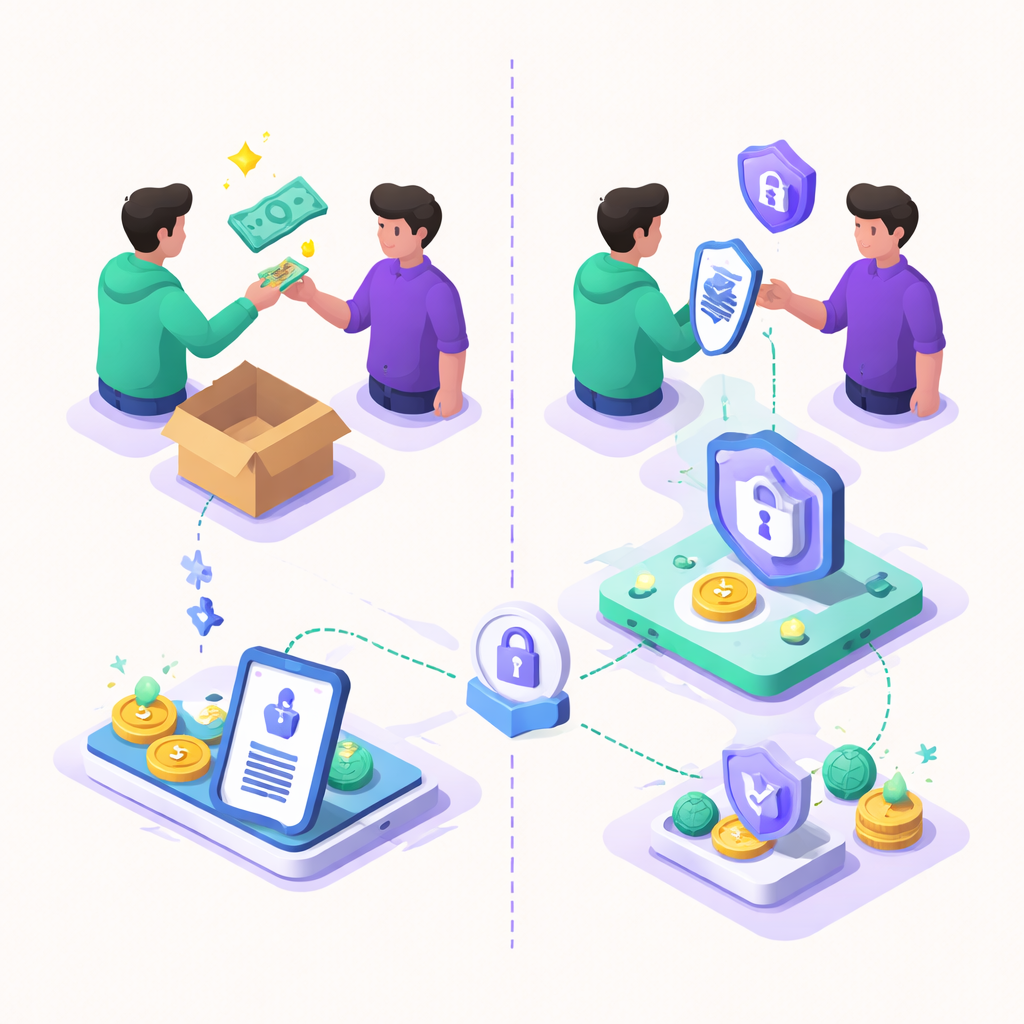
Illustration pour "Payment services provided by Stripe: what that means"
When to use trust protect and when a direct deal may be enough
Not every transaction needs a structured intermediation layer. If two people know each other well, the amount is small, and the item can be exchanged in person immediately, a direct transaction may be sufficient.
But trust protect becomes much more relevant when the stakes rise. The more uncertainty, distance, customization, or value involved, the more useful a structured process becomes.
Use a trust protect model when:
- the buyer and seller are strangers
- the transaction is high value
- the item must be shipped
- authenticity or condition is critical
- the service has multiple milestones
- cross-border logistics are involved
A direct deal may be enough when:
- the amount is low
- the exchange happens face to face
- both parties already trust each other
- the item can be fully inspected before payment
The decision is really about risk concentration. If one mistake could cost a lot of money or create a long dispute, structure is worth more than speed.
Many users hesitate because they think structured flows are only for businesses. In reality, private individuals often need them more, because they lack legal teams, formal contracts, and internal compliance processes.
A good rule of thumb is this: if you would feel uncomfortable sending money based only on a chat conversation, you probably need a more secure transaction framework.
Common high-risk scenarios
The following situations deserve extra caution:
- urgent seller pressure to pay immediately
- refusal to provide detailed evidence
- requests to move communication off-platform too early
- inconsistent identity information
- unusually low prices for premium goods
These are not always proof of fraud, but they are strong reasons to slow down and document everything.
How to evaluate a secure transaction platform
If you are comparing platforms, do not focus only on appearance or branding. The real question is whether the service creates measurable transaction discipline.
A useful platform should make it easier to verify participants, define terms, document evidence, and connect payment events to transaction milestones.
Look for these criteria:
- clear user verification steps
- structured item or service descriptions
- milestone or inspection logic
- integrated documentation trail
- payment services provided by a recognized provider such as Stripe
- transparent dispute or review procedures
- simple but precise user experience
You should also evaluate whether the platform is suitable for your transaction type. Physical goods, digital services, custom manufacturing, and collectibles do not all need the same workflow.
Here is a practical evaluation table:
| Evaluation criterion | Why it matters | What to check |
|---|---|---|
| Identity verification | Reduces anonymous fraud risk | Is there a real verification process? |
| Transaction documentation | Improves evidence quality | Are terms centralized and timestamped? |
| Milestone design | Prevents vague completion disputes | Can deliverables be defined clearly? |
| Payment integration | Supports a secured payment flow | Are payment services provided by a trusted provider? |
| User guidance | Reduces mistakes | Does the platform explain each step clearly? |
| Dispute readiness | Helps if issues arise | Are records easy to review? |
The best platforms do not just process transactions. They shape better transaction behavior.
That is the real benchmark. If a platform encourages clarity, evidence, and disciplined sequencing, it is doing more than facilitating payment. It is reducing the conditions in which fraud and confusion thrive.
Questions to ask before choosing a platform
Before committing, ask:
- How are users verified?
- How are terms recorded?
- What proof can be attached to a transaction?
- How are milestones or inspections handled?
- Who provides the payment services?
If the answers are vague, the protection may be weaker than it appears.
Best practices to get the most from trust protect
Using trust protect well is not complicated, but it does require discipline. The process works best when both parties treat the transaction like a documented project rather than a casual exchange.
That means being precise early, responsive during the transaction, and factual if any issue appears.
Best practices for both sides include:
- write a complete description of the item or service
- define delivery, inspection, or milestone rules in advance
- upload evidence before key steps, not after problems arise
- keep communication consistent and professional
- review deadlines carefully and act on time
- avoid side agreements outside the documented process
For buyers, one of the most important habits is to inspect quickly and report issues with specifics. Saying “this is not right” is weak. Saying “the serial number differs from the listing and the screen has an undisclosed crack” is actionable.
For sellers, speed and documentation are essential. Late shipping, incomplete proof, or vague responses create doubt even when the seller is acting honestly.
It also helps to think in terms of transaction hygiene. Good hygiene means every important claim can be supported by a document, image, message, or timestamped event.
That is what turns a risky peer-to-peer exchange into a more manageable process. The goal is not bureaucracy for its own sake. The goal is to make the transaction understandable, verifiable, and fairer for both sides.
A simple transaction checklist
Before starting:
- verify identity details
- confirm exact terms
- gather supporting evidence
During the transaction:
- follow the documented steps
- keep records centralized
- respect timelines
At completion:
- validate conformity promptly
- confirm final status clearly
- archive key documents
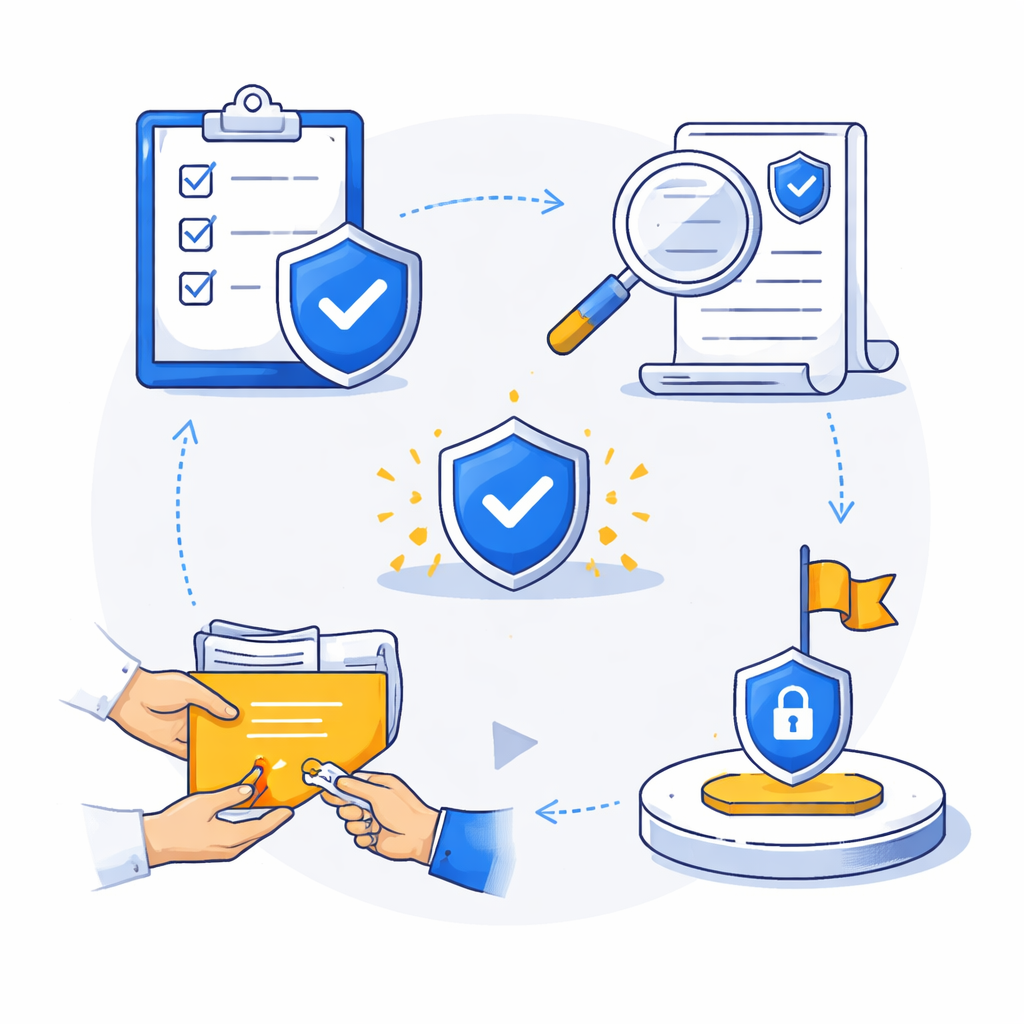
Illustration pour "Best practices to get the most from trust protect"
Questions fréquentes
What is trust protect?
trust protect is a structured approach to safer peer-to-peer transactions. It combines documentation, participant verification, milestone-based validation, and a secured payment flow, with payment services provided by Stripe.
Is trust protect the same as escrow?
No. The correct description is a technical intermediation platform with payment services provided by Stripe. It is designed to structure and secure the transaction flow, not to be described as an escrow service.
How does trust protect help buyers avoid fraud?
It helps buyers by improving transaction clarity before payment, requiring better evidence, and creating a more traceable process for delivery or milestone validation. That reduces the chance of paying based only on informal promises.
How does trust protect help sellers?
Sellers benefit from clearer proof of what was agreed, stronger documentation of condition or scope, and a more disciplined transaction process. This can reduce misunderstandings, false claims, and last-minute renegotiation attempts.
Who provides the payment services in trust protect transactions?
Payment services are provided by Stripe through Stripe Connect Express. The platform itself acts as a technical intermediation layer that supports the secured payment flow and transaction coordination.
When should I use trust protect instead of paying directly?
Use trust protect when the transaction is high value, remote, customized, shipped, or between strangers. For low-value, in-person exchanges where the item can be inspected immediately, a direct deal may be enough.
Can trust protect remove all transaction risk?
No. No system can eliminate all risk. What trust protect does is reduce risk through better verification, clearer terms, stronger documentation, and a more structured transaction sequence.
Conclusion
trust protect is most useful when a transaction needs more than goodwill. It gives buyers and sellers a clearer framework, better evidence, and a secured payment flow connected to real transaction steps rather than informal promises.
The key point is simple: safer peer-to-peer commerce depends on structure. When payment services are provided by Stripe and the platform focuses on technical intermediation, documentation, and milestone logic, both parties gain a more reliable path to completion.
If you are evaluating whether trust protect is worth using, focus on the practical benefits:
- clearer terms before money moves
- better verification and traceability
- stronger documentation for goods or services
- reduced ambiguity around delivery and completion
- a more professional process for higher-risk deals
For expensive, remote, or custom transactions, that extra structure is often the difference between a manageable deal and an avoidable dispute.
Protect your next transaction with TrustProtect
Payment held by Stripe until validation. Buyer protected, seller paid upon validation.
Create a free accountReady to secure your next transaction?
TrustProtect organizes a secure journey between buyer and seller. Payment via Stripe, validation on the platform.