
Secure Payment Method Between Strangers Online: Full Guide
Buying or selling to someone you do not know carries real risk. This guide explains how to choose a safer payment flow, verify the other party, and avoid common online fraud traps.
Secure Payment Method Between Strangers Online: Full Guide
Secure payment method between strangers online is one of the most important questions in peer-to-peer transactions. When two private parties trade online, the main challenge is not only sending money but reducing fraud, chargeback disputes, and delivery uncertainty. The safest approach combines identity checks, documented terms, tracked delivery, and payment services provided by Stripe through a technical intermediation platform. This guide explains what works, what to avoid, and how buyers and sellers can protect themselves.
What makes a secure payment method between strangers online
A secure payment method between strangers online is not defined by speed alone. It is defined by how well it reduces the main risks in a private transaction: fake identity, non-payment, non-delivery, damaged goods, and disputes over what was agreed.
In practice, a safer transaction usually includes several layers of protection rather than one tool. A payment link by itself is not enough if there is no proof of identity, no written agreement, and no delivery evidence.
The strongest setup usually includes:
- verified buyer and seller information
- a documented description of the item or service
- a secured payment flow through payment services provided by Stripe
- shipping with tracking and delivery confirmation
- a clear process if one party does not comply
This matters because many scams exploit urgency and informality. Fraudsters try to move the conversation off-platform, avoid written records, or push instant irreversible transfers before trust is established.
Why private transactions are riskier than marketplace checkouts
Large marketplaces often add built-in moderation, dispute workflows, and seller history. In a direct sale between strangers, those protections are often missing, so both parties must create their own safety framework.
That is why safe online payment private transactions should never rely on trust alone. A secure setup requires verification, documentation, and a payment flow designed for accountability.
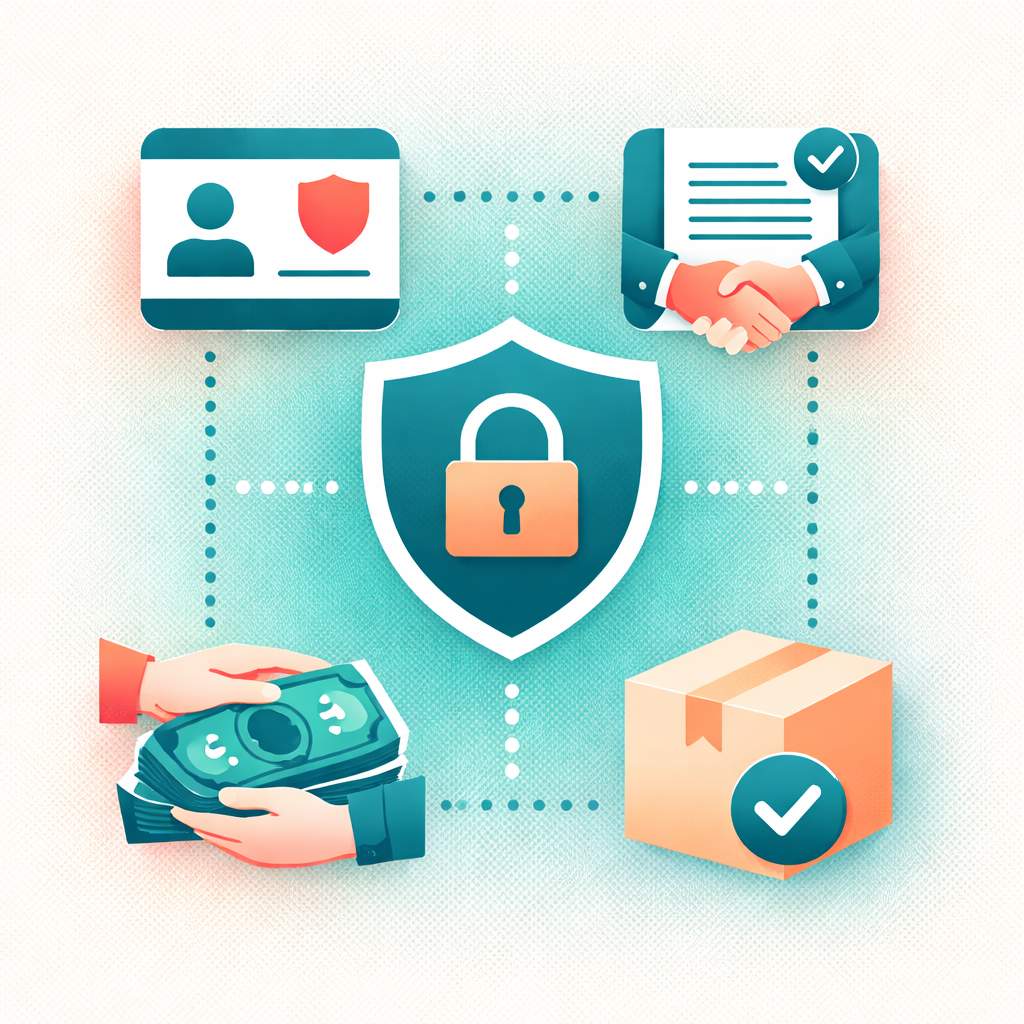
Illustration pour "What makes a secure payment method between strangers online"
Main risks in stranger payment trust situations
Before choosing a payment option, it helps to understand what can go wrong. Most failed private transactions follow a small number of recurring patterns.
For buyers, the biggest risk is paying and receiving nothing. For sellers, the biggest risk is shipping an item and then facing a payment reversal, false complaint, or fake proof of transfer.
Common risks include:
- fake seller profiles using stolen photos
- buyers sending forged payment confirmations
- requests to pay by bank transfer with no recourse
- claims that an item was never received
- chargeback abuse after delivery
- counterfeit shipping receipts or altered tracking numbers
- pressure to act quickly because of a "limited-time" excuse
A good stranger payment trust process reduces these risks by making each stage visible and documented. The transaction should show who is involved, what is being sold, how much is due, and what evidence will confirm completion.
Buyer-side risks
Buyers often focus only on price, but low prices are a common fraud trigger. If the seller avoids detailed photos, refuses a timestamped image, or cannot describe the item accurately, the listing may be fake.
Another major issue is payment finality. Some methods are fast but offer little practical recourse in a private dispute, especially when the seller identity is weak or false.
Seller-side risks
Sellers face a different set of threats. A buyer may claim the package was empty, damaged, or unauthorized, especially when the shipment was poorly documented.
That is why online sale protection for sellers depends on item photos, serial numbers, packaging evidence, tracked shipping, and a clear transaction record from the start.
Comparing payment options for private online transactions
Not all payment methods offer the same level of protection in a private sale. Some are convenient but weak on verification, while others support a more structured and documented transaction.
The right choice depends on the item value, shipping method, and whether both parties are willing to complete identity checks and follow a secured process.
Payment method comparison table
| Payment option | Speed | Identity visibility | Dispute support | Best use case | Main limitation |
|---|---|---|---|---|---|
| Cash in person | Immediate | Medium | Low | Local hand-to-hand exchange | Unsafe for remote sales |
| Direct bank transfer | Fast to medium | Medium | Low | Low-risk known contacts | Hard to reverse in private fraud cases |
| Card payment via secured payment flow | Fast | Higher when linked to verification | Medium to high depending on process | Remote transactions between strangers | Requires structured platform process |
| Wallet or instant transfer app | Fast | Low to medium | Low to medium | Small informal payments | Often weak evidence in disputes |
| Cash on delivery | Medium | Low | Low | Limited physical goods cases | Does not verify item condition before acceptance |
Which options are usually weakest
The weakest methods are those that create little evidence and are hard to challenge later. That includes informal transfers made after a chat conversation with no verified identity and no documented transaction terms.
Be cautious with:
- direct transfers requested in a hurry
- screenshots used as proof of payment
- gift-card style payments
- cryptocurrency requested by an unknown seller
- split payments sent across multiple channels
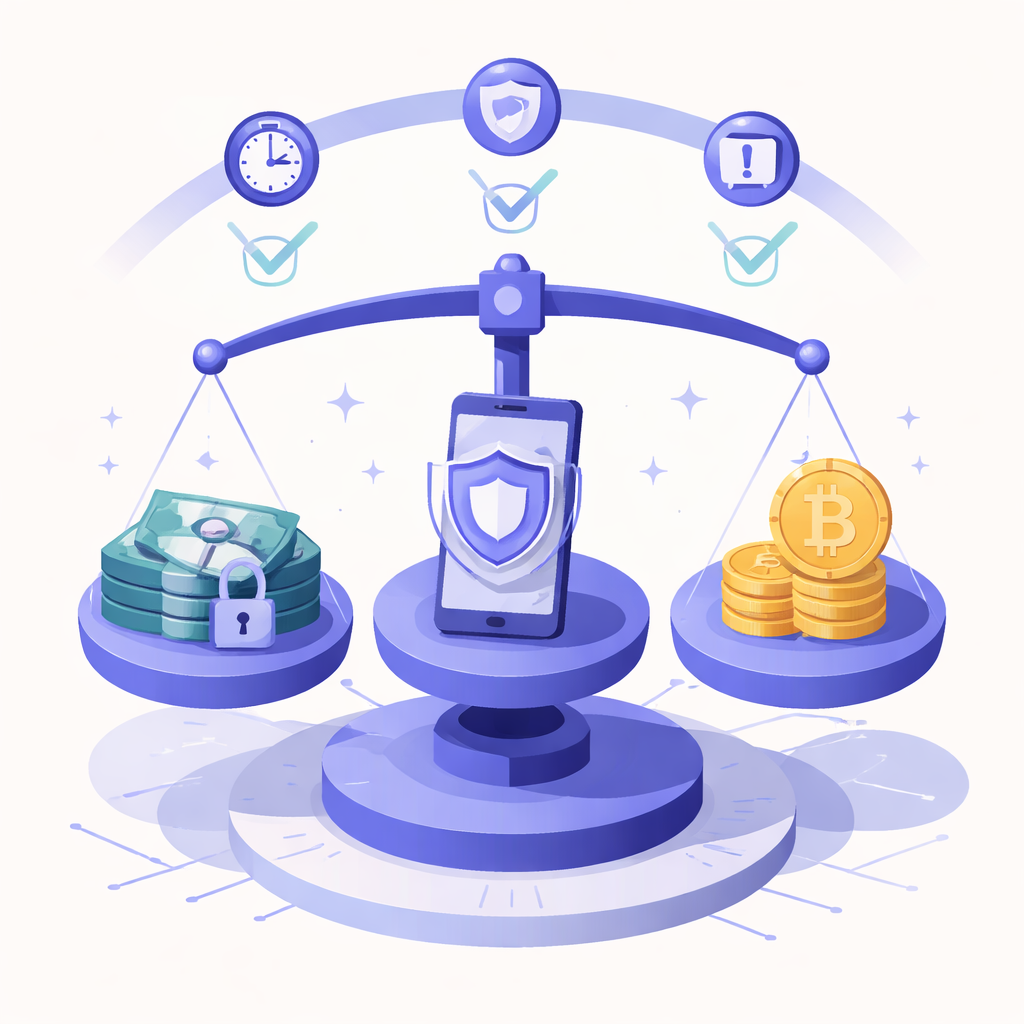
Illustration pour "Comparing payment options for private online transactions"
How a secured payment flow protects both buyer and seller
A secured payment flow is designed to reduce ambiguity at every stage of the transaction. Instead of relying on informal messages, it creates a structured sequence with clear evidence points.
For a secure payment method between strangers online, that structure matters more than branding or convenience. The process should define what happens before payment, before shipment, after delivery, and in case of disagreement.
A stronger transaction flow usually includes:
- identity collection for both parties
- item or service description agreed in writing
- payment services provided by Stripe
- shipping information and tracking integration when relevant
- proof of delivery or completion
- a documented path for dispute review
This approach benefits buyers because they can see what they are paying for and under what conditions. It benefits sellers because they can prove what was sold, when it was shipped, and how completion was confirmed.
Why documentation is as important as payment
Many disputes are not really about fraud but about missing evidence. If the item condition, accessories, serial number, or delivery terms were never documented, each side can tell a different story later.
That is why safe online payment private transactions should always include a written summary of the sale. Even a short, precise record is better than a long informal chat.
Why sellers should never rely on screenshots
A screenshot is not proof that money is available or that a transaction is final. Fraudsters frequently alter images or send fake confirmation emails that look convincing under time pressure.
Sellers should rely only on the actual transaction status inside the secured payment flow and ship only when the process confirms the next step.
Best practices for buyers using a secure payment method between strangers online
Buyers can reduce risk significantly by slowing down and checking the basics. Most scams succeed because the buyer focuses on price and ignores process signals.
When using a secure payment method between strangers online, buyers should verify the seller, the item, and the delivery terms before paying.
Buyer checklist before payment
Use this checklist before sending money:
- ask for recent photos with a handwritten date or unique detail
- request the full item description, condition, and included accessories
- confirm the final price, shipping cost, and delivery method in writing
- verify the seller identity if the platform supports it
- check whether tracked shipping will be used
- keep all communication in one traceable place
- avoid pressure tactics such as "pay now or lose it"
If the item is expensive, ask for additional proof such as:
- serial number photos
- video showing the product powering on
- original purchase receipt if available
- packaging photos before shipment
What buyers should do after payment
After payment, save every piece of evidence. That includes the item listing, chat history, invoice or transaction summary, and shipping updates.
When the package arrives, inspect it promptly and document the opening if the item is high value. Photos and video can help if the delivered item does not match the agreed description.
Best practices for sellers and online sale protection
Sellers often underestimate how much evidence they need. In a private sale, good records are not optional; they are the foundation of online sale protection.
A seller should be able to prove four things clearly: who bought the item, what was sold, what condition it was in, and how it was delivered.
Seller checklist before shipping
Before shipping, sellers should:
- confirm the buyer details in the transaction flow
- save the agreed item description and price
- photograph the item from multiple angles
- capture serial numbers or unique identifiers
- photograph the packaging process
- use tracked shipping with delivery confirmation
- keep the shipping receipt and tracking number
For fragile or high-value goods, also consider:
- weighing the parcel before dispatch
- using signature confirmation
- insuring the shipment when available
- recording a short packing video
These steps strengthen stranger payment trust because they reduce uncertainty. A buyer sees that the seller is organized, and the seller gains evidence if a false claim appears later.
How sellers should handle suspicious buyer behavior
Pause the transaction if the buyer changes the delivery address after payment, asks to communicate only outside the platform, or sends inconsistent identity details. These are common warning signs.
Sellers should also reject requests to ship before the secured payment flow confirms the correct status. Shipping early is one of the most common and costly mistakes in private online sales.
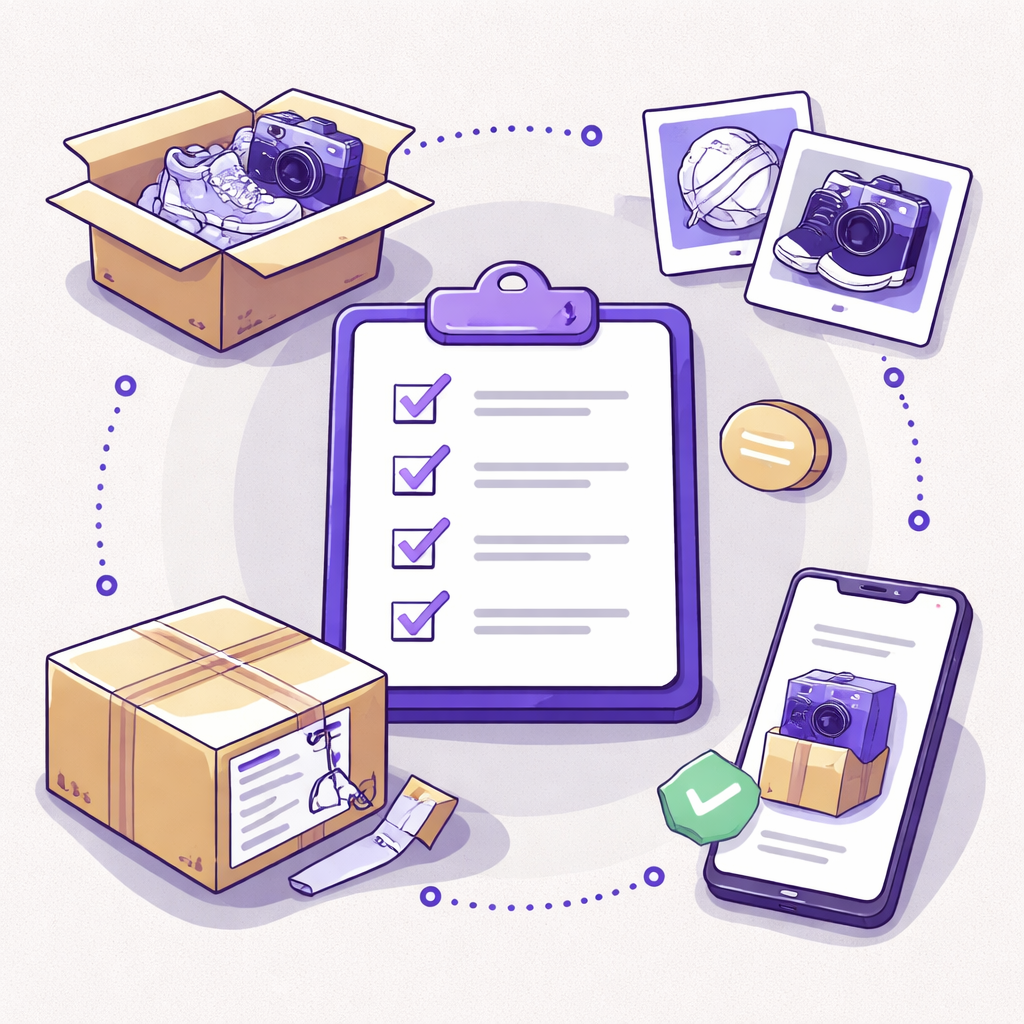
Illustration pour "Best practices for sellers and online sale protection"
Red flags that mean you should stop the transaction
Some warning signs are strong enough that the safest decision is to walk away. A legitimate buyer or seller may be busy or inexperienced, but they usually do not resist basic transparency.
If several red flags appear together, the transaction is no longer a good candidate for a secure payment method between strangers online.
High-risk signals from sellers
Watch for these seller red flags:
- price far below normal market value
- refusal to provide recent item photos
- inconsistent name, email, or shipping details
- copied product descriptions from other listings
- urgent stories designed to force immediate payment
- refusal to use tracked shipping
A fake seller often wants speed, not clarity. The more questions you ask, the more their story starts to break apart.
High-risk signals from buyers
Watch for these buyer red flags:
- overpayment offers followed by refund requests
- fake payment confirmations or altered receipts
- requests to ship to a different person or address
- pressure to bypass the normal transaction flow
- refusal to provide required verification
- unusual insistence on a specific payment channel
How to build stranger payment trust without taking unnecessary risk
Stranger payment trust does not mean blind confidence. It means creating enough verified information and transaction evidence that both sides can proceed with reasonable security.
Trust grows when the process is transparent, symmetrical, and documented. Each party should know what the other has provided and what happens next.
A practical trust framework
Use this framework for safer private transactions:
- Verify identity.
- Define the item or service precisely.
- Confirm the price and responsibilities in writing.
- Use a secured payment flow with payment services provided by Stripe.
- Use tracked delivery or documented completion.
- Keep evidence until the transaction is fully completed.
This framework works because it reduces room for misunderstanding. It also makes fraud more difficult, since the other party must stay consistent across multiple checkpoints.
When local in-person payment may be better
For low-value items, an in-person exchange in a public place may be simpler than a remote transaction. The buyer can inspect the item directly, and the seller can complete the handover immediately.
Even then, basic precautions still matter:
- meet in daylight or a monitored public area
- avoid carrying large amounts of cash if possible
- confirm the item condition on the spot
- keep a written record of the sale for expensive goods
Choosing the right process for low, medium, and high-value sales
The level of protection should match the value and complexity of the transaction. A $30 used accessory does not need the same process as a $2,000 laptop or a custom service contract.
The best secure payment method between strangers online is therefore context-dependent, but the principle stays the same: more value means more verification and more documentation.
Recommended approach by transaction value
| Transaction level | Typical example | Recommended safeguards |
|---|---|---|
| Low value | Small household item | Written agreement, basic identity details, tracked shipping if remote |
| Medium value | Phone, game console, furniture deposit | Verified identity, detailed item photos, secured payment flow, tracked delivery |
| High value | Laptop, luxury item, specialist equipment | Full verification, serial numbers, packaging evidence, signature delivery, complete transaction record |
Why services also need a secure process
This topic is not limited to physical goods. Freelance work, tutoring, repairs, and digital services also involve stranger risk when two private parties meet online.
For services, define:
- scope of work
- delivery date
- acceptance criteria
- revision policy
- proof of completion
A vague service description creates the same dispute risk as a vague product listing.
Questions fréquentes
What is the most secure payment method between strangers online?
The safest option is usually a structured transaction with verified identities, clear written terms, tracked delivery when relevant, and a secured payment flow using payment services provided by Stripe. The key is not just the payment itself, but the documentation and verification around it.
Is bank transfer safe for private online sales?
Bank transfer can work for low-risk situations, but it is often weak for transactions between strangers because recourse may be limited if fraud occurs. For a secure payment method between strangers online, stronger documentation and a structured process are usually better.
How can I trust a stranger when buying something online?
Do not rely on trust alone. Build stranger payment trust through identity checks, recent item photos, written terms, tracked shipping, and a secured payment flow that creates a clear transaction record.
What is the safest way to accept payment from a stranger online as a seller?
Sellers should use a documented payment process, verify buyer details, keep proof of the item condition, and ship only after the transaction status is properly confirmed. Never rely on screenshots or email images as proof of payment.
How do I protect myself in a private online sale?
For strong online sale protection, document the item or service, confirm terms in writing, keep all messages, use tracked delivery, and preserve photos, receipts, and transaction records. Protection comes from evidence as much as from the payment method.
Are instant payment apps safe for paying strangers online?
They may be convenient, but they are not always ideal for higher-risk private sales. If identity verification, written terms, and delivery evidence are missing, an instant app alone is usually not enough for a safe transaction.
Conclusion
Choosing a secure payment method between strangers online is really about choosing a secure transaction process. The safest private deals combine verified identities, clear written terms, payment services provided by Stripe through a technical intermediation platform, and strong delivery or completion evidence.
If you are buying, verify the seller and the item before paying. If you are selling, document the product and ship only when the secured payment flow confirms the correct status.
Use this checklist for safer private transactions:
- verify who the other party is
- document exactly what is being sold
- confirm price, shipping, and conditions in writing
- use a secured payment flow, not informal screenshots
- keep tracking, receipts, and photos until completion
- stop immediately if multiple red flags appear
A good secure payment method between strangers online protects both sides because it reduces uncertainty. In private online sales, clarity is what creates trust.
Protect your next transaction with TrustProtect
Payment held by Stripe until validation. Buyer protected, seller paid upon validation.
Create a free accountReady to secure your next transaction?
TrustProtect organizes a secure journey between buyer and seller. Payment via Stripe, validation on the platform.