
Buyer Protection in Peer-to-Peer Sales Online Explained
A practical guide to buyer protection in private online sales, including payment flow, fraud checks, dispute evidence, and safer transaction steps.
Buyer Protection in Peer-to-Peer Sales Online Explained
Buyer protection peer-to-peer sale online means reducing risk when buying from a private seller through a structured, verifiable transaction process. In private sales, the main risks are fake listings, non-delivery, hidden defects, and identity fraud. Strong protection depends on seller verification, documented communication, traceable payment services provided by Stripe, and clear proof at every step. This guide explains what buyers should check before paying, during delivery, and if a dispute appears.
What buyer protection means in private online sales
In a private transaction, buyer protection peer-to-peer sale online does not mean zero risk. It means the transaction is structured so that identity, item condition, payment, delivery, and dispute evidence are documented from start to finish.
Unlike a standard retail purchase, a private sale often has fewer legal guarantees and less platform oversight. That is why the buyer must rely on process quality, not only on trust.
A strong protection framework usually includes:
- verified buyer and seller identities
- a clear description of the item and its condition
- documented agreement on price, shipping, and timing
- a secured payment flow with payment services provided by Stripe
- proof of dispatch and proof of receipt
- a dispute path based on objective evidence
The biggest mistake buyers make is focusing only on price. A lower price is rarely worth it if the seller refuses verification, avoids written confirmation, or pushes for an untraceable payment method.
Why private sales are different from retail purchases
A retailer usually operates under formal consumer processes, return policies, and centralized customer support. In a private sale, the buyer often deals directly with an individual who may have no established business procedures.
This changes the risk profile in several ways:
- item descriptions may be incomplete or inaccurate
- shipping terms may be vague
- the seller may disappear after payment
- legal recourse may be slower and more complex
For that reason, p2p buyer protection depends heavily on prevention before payment, not only on action after a problem occurs.
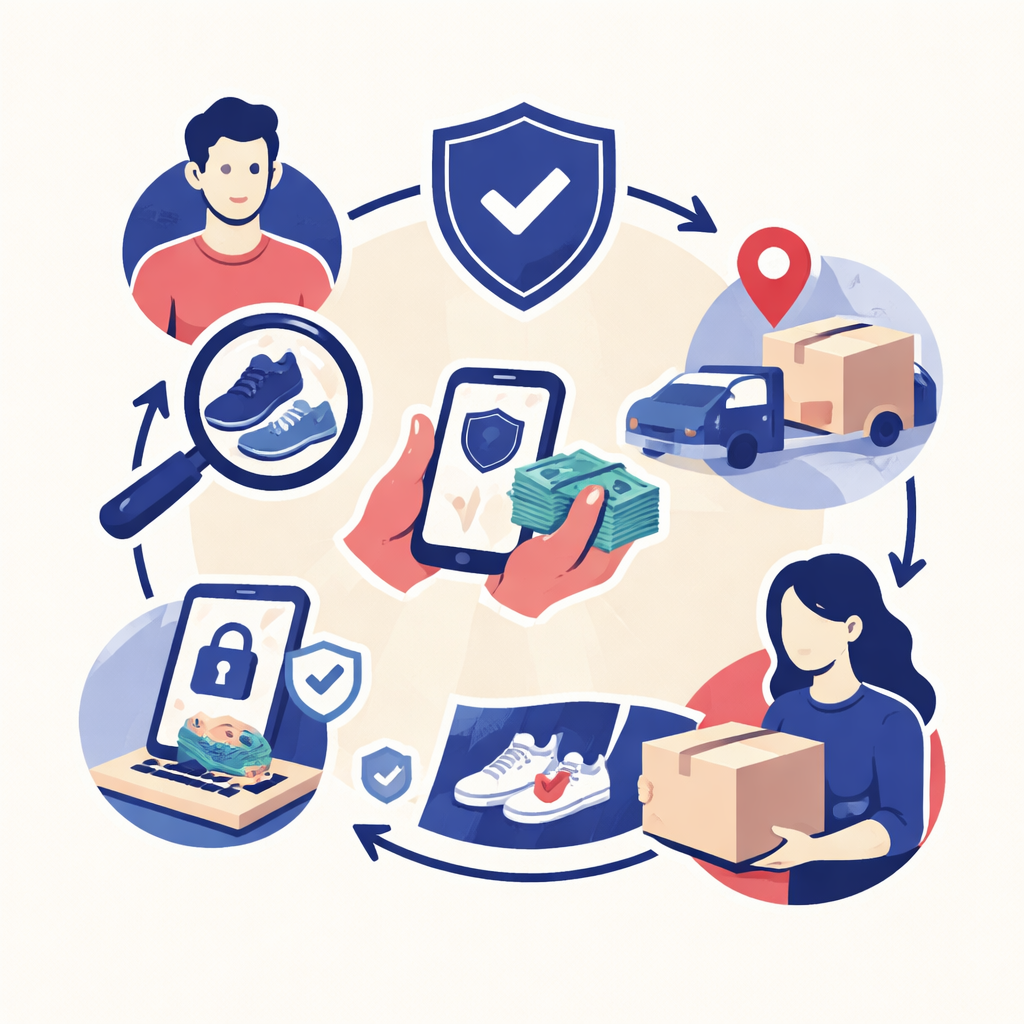
Illustration pour "What buyer protection means in private online sales"
The main risks buyers face in a peer-to-peer transaction
Understanding the risk types is the first step toward effective buyer protection peer-to-peer sale online. Most private-sale disputes fall into a small number of recurring scenarios.
Common buyer risks include:
- the item never ships
- the item received is different from the listing
- the item is damaged, counterfeit, or incomplete
- the seller uses stolen photos or a false identity
- shipping tracking is missing or manipulated
- communication moves off-platform too quickly
Risk is also cumulative. One weak signal may be manageable, but several together usually indicate that the transaction should be avoided.
A practical buyer risk review should cover:
- seller identity consistency across profile, messages, and payment details
- item evidence quality, including serial numbers or unique marks where relevant
- realistic pricing compared with market value
- shipping feasibility, timing, and carrier choice
- written confirmation of what exactly is being sold
High-risk categories in online private sales
Some products attract more fraud because they are expensive, easy to resell, and difficult to verify remotely. These categories need stronger evidence before payment.
Examples include:
- smartphones and laptops
- luxury goods and watches
- gaming consoles
- event tickets
- collectible cards and limited editions
- vehicle deposits and high-value parts
For these items, ask for additional proof such as timestamped photos, packaging details, visible defects, and ownership evidence.
How buyer protection peer-to-peer sale online works in practice
Effective protection is not a single feature. It is a sequence of controls that reduce uncertainty at each stage of the transaction.
A safer transaction flow typically looks like this:
- The buyer reviews the listing and seller profile.
- The seller provides item details, condition notes, and supporting images.
- Both parties agree in writing on price, shipping, and delivery terms.
- The transaction uses a secured payment flow, with payment services provided by Stripe.
- The seller ships with tracking and keeps proof of dispatch.
- The buyer checks the item promptly and documents any issue.
- If needed, the dispute process relies on messages, images, tracking, and timestamps.
This process matters because every stage creates evidence. Evidence is what makes marketplace buyer protection and private-sale protection workable in real cases.
What a technical intermediation platform adds
A technical intermediation platform helps organize the transaction so that key steps are recorded consistently. It does not replace buyer judgment, but it improves visibility and traceability.
Useful platform-level controls include:
- identity and profile checks
- structured transaction records
- standardized status updates
- centralized evidence collection
- secured payment flow with payment services provided by Stripe
This reduces ambiguity compared with informal deals arranged through scattered messages and direct transfers.
Why documentation matters more than promises
Verbal assurances or casual chat messages are weak if the item arrives damaged or not at all. Buyers should always make sure the final agreement is explicit and easy to prove.
Document at minimum:
- exact item name and model
- condition and known defects
- included accessories
- final price and shipping cost
- shipping method and expected dispatch date
- return or dispute expectations if applicable
Checks to complete before you pay a private seller
The strongest online private buyer rights strategy starts before money moves. Once payment is made, your options usually narrow and your leverage decreases.
Before paying, verify these points:
- the seller's name matches the transaction context
- the photos appear original, not copied from another listing
- the item description includes condition details, not only generic claims
- the price is plausible for the market
- the seller accepts a structured, traceable payment flow
- shipping terms are clear and realistic
A simple pre-payment checklist can prevent most avoidable disputes.
| Check | Why it matters | What to request |
|---|---|---|
| Identity consistency | Reduces impersonation risk | Matching profile and transaction details |
| Fresh item photos | Confirms possession | Timestamped images from multiple angles |
| Serial or unique details | Helps prove item identity | Close-up photos where relevant |
| Written terms | Prevents later disagreement | Price, shipping, condition, included parts |
| Tracking commitment | Supports delivery proof | Carrier and dispatch timeline |
Buyers should also keep all communication in one place whenever possible. Fragmented conversations across apps make disputes harder to reconstruct.
Questions every buyer should ask
You do not need a long legal questionnaire. A few precise questions often reveal whether the seller is transparent and organized.
Ask:
- When and where was the item purchased?
- Are there any defects, repairs, or missing parts?
- Can you send photos taken today from specific angles?
- Which carrier will you use, and when will you ship?
- What exactly is included in the package?
Clear, consistent answers are a good sign. Evasive or contradictory answers are not.
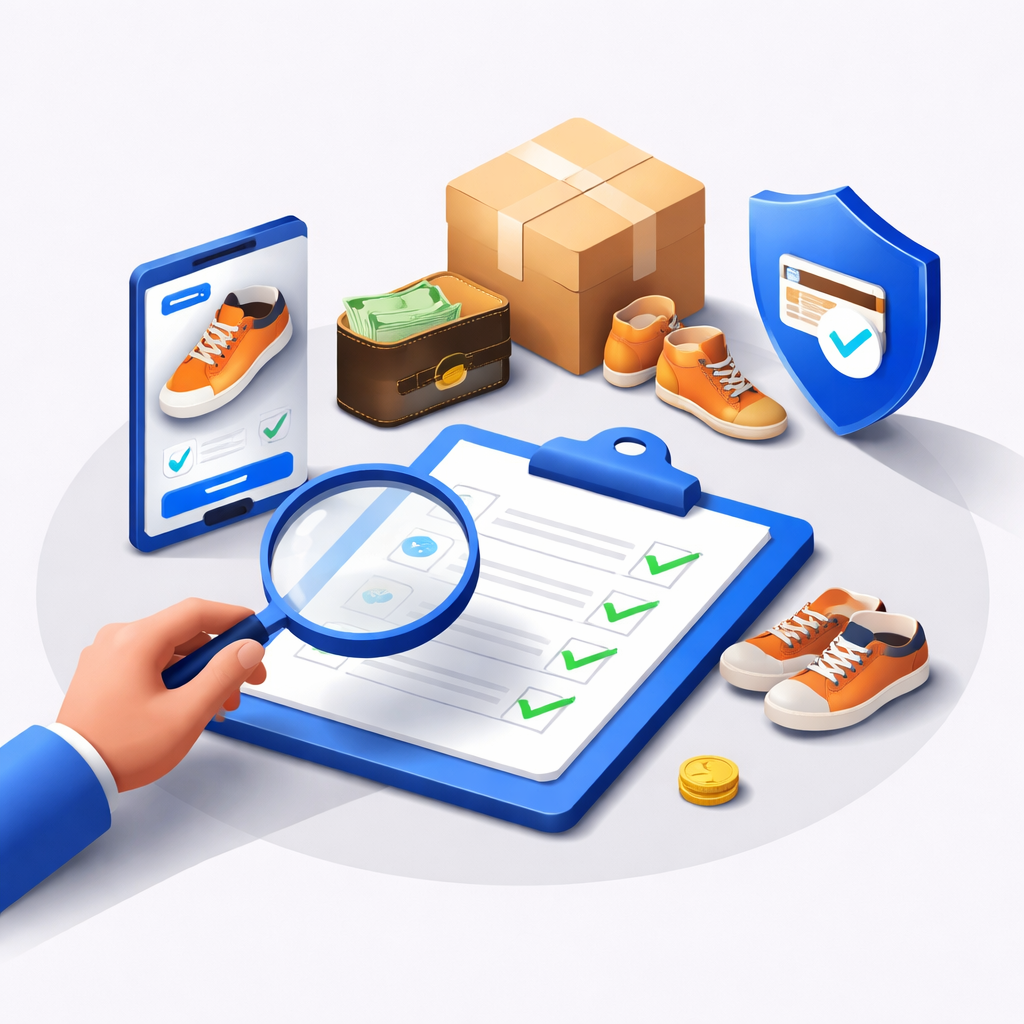
Illustration pour "Checks to complete before you pay a private seller"
P2P buyer protection and payment flow: what actually matters
Many buyers assume protection depends only on the payment method. In reality, the payment step is only one part of buyer protection peer-to-peer sale online.
What matters most is whether the payment is linked to a structured transaction with identifiable parties and documented terms. Payment services provided by Stripe support a secured payment flow, but the buyer still needs proper item evidence and delivery proof.
The payment layer works best when combined with:
- verified transaction participants
- a clear item record
- agreed shipping details
- timestamps for key actions
- centralized dispute evidence
Here is a practical comparison of common approaches:
| Payment approach | Traceability | Buyer risk level | Notes |
|---|---|---|---|
| Structured secured payment flow | High | Lower | Best when tied to full transaction records |
| Direct bank transfer after chat | Medium to low | Higher | Often weak for dispute reconstruction |
| Cash payment with shipping | Very low | Very high | Poor evidence if item never arrives |
| Informal app-to-app transfer | Low | High | Easy to misuse outside a documented process |
Why off-platform payment requests are risky
Fraudsters often try to move the transaction away from any structured environment. They may claim it is faster, cheaper, or simpler.
This creates several problems:
- the item and payment may no longer be clearly linked
- identity checks may be bypassed
- message history may become fragmented
- dispute evidence may be incomplete
If a seller insists on bypassing the agreed transaction flow, that is a serious warning sign.
Delivery, inspection, and evidence after payment
A buyer's job does not end once payment is completed. The delivery and inspection stage is where many disputes are won or lost.
When the package arrives, inspect it quickly and document the process. If the item is high value, record the opening and keep the packaging until you confirm everything matches the agreement.
Best practices after delivery:
- photograph the package before opening if damaged or suspicious
- record the unboxing for expensive items
- compare the item with the listing and written terms
- test core functions immediately
- keep labels, tracking details, and packaging
- report any issue without delay
Fast reporting matters because delays weaken the factual timeline. If the item is damaged, incomplete, or different from the description, evidence should be gathered the same day whenever possible.
What counts as useful dispute evidence
Not all evidence has the same value. The most useful evidence is specific, dated, and directly connected to the transaction.
Strong examples include:
- screenshots of the listing and item description
- written agreement on condition and included parts
- tracking history and delivery confirmation
- photos or video of the received item
- visible serial numbers or distinguishing marks
- messages showing what the seller promised
Weak evidence usually includes vague statements, missing timestamps, or photos that do not clearly show the issue.
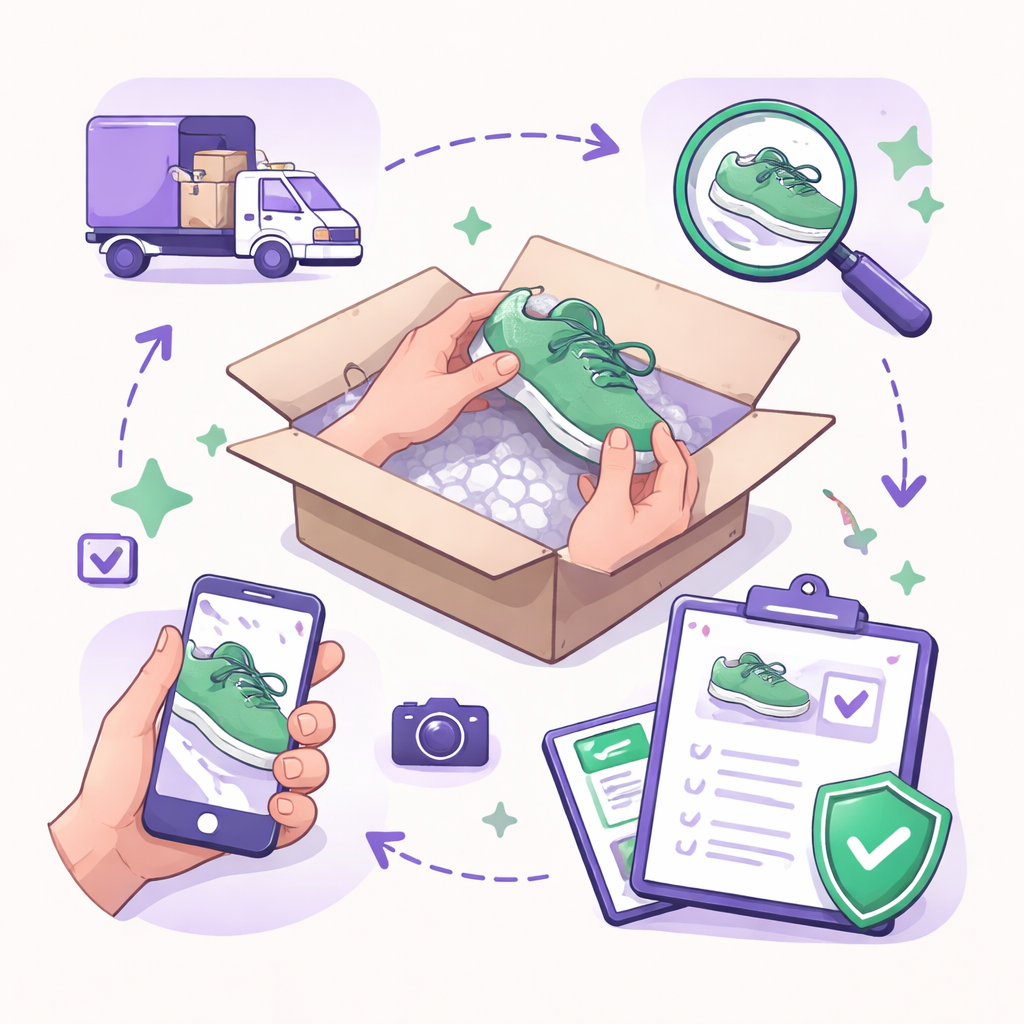
Illustration pour "Delivery, inspection, and evidence after payment"
Marketplace buyer protection vs private-sale protection
Many users search for marketplace buyer protection because large platforms have familiar rules and support systems. However, private-sale protection can still be effective when the transaction is structured properly.
The main difference is that marketplaces often standardize listings, communication, and complaint handling. In private transactions, the buyer must pay more attention to evidence quality and process discipline.
| Aspect | Large marketplace | Private peer-to-peer sale |
|---|---|---|
| Listing structure | Usually standardized | Often variable |
| Seller history | Often visible | May be limited |
| Transaction records | Centralized | Depends on process used |
| Dispute workflow | Usually formalized | Can be less standardized |
| Buyer responsibility | Moderate | Higher |
A good private-sale process should replicate the strongest marketplace habits:
- clear item descriptions
- documented communication
- traceable payment flow
- tracked delivery
- prompt issue reporting
When private sales can be safer than they look
A private sale can be well protected if both parties accept transparency and follow a documented process. In some cases, direct communication even makes it easier to clarify condition details before purchase.
The key is not whether the seller is private or professional. The key is whether the transaction creates reliable proof at each stage.
What to do if the item never arrives or is not as described
If a problem happens, act quickly and stay factual. Good buyer protection peer-to-peer sale online depends on a clear timeline and organized evidence, not emotional messages.
Start with these steps:
- review the written agreement and listing details
- check tracking and delivery status
- contact the seller with a concise summary of the issue
- attach photos, timestamps, and relevant screenshots
- keep all communication in writing
- follow the platform's dispute process if available
Your first message should be precise. State what was agreed, what happened, and what evidence you have.
A useful structure is:
- transaction reference
- item name
- date of payment and expected shipping date
- actual delivery status or defect observed
- attached evidence
- requested next step
If the seller becomes inconsistent, abusive, or unresponsive, stop debating and focus on preserving the record. Save screenshots, tracking updates, and all item photos in one folder.
Examples of common dispute scenarios
The response depends on the issue, but the evidence principles stay the same.
Typical cases include:
- non-delivery despite payment confirmation
- delivered package with missing contents
- item received in a different condition than described
- counterfeit or non-functional item
- wrong model, size, or version sent
In each case, compare the received item with the original description and document the mismatch clearly.
Best practices to improve buyer protection peer-to-peer sale online
The safest buyers are usually the most methodical, not the most experienced. A repeatable process reduces mistakes and makes fraud easier to detect.
Use this practical checklist for every private purchase:
- verify seller identity consistency
- request fresh, detailed item photos
- confirm condition, accessories, and defects in writing
- agree on shipping method and timing
- use a secured payment flow with payment services provided by Stripe
- keep all communication and evidence organized
- inspect the item immediately after delivery
- report issues quickly with proof
You should also adapt your caution level to the value and risk of the item. A low-cost household object does not require the same depth of verification as a luxury watch or laptop.
For higher-value transactions, add extra controls:
- ask for video proof of the item working
- request close-ups of identifiers or serial numbers
- compare the seller's photos with known product details
- confirm packaging contents in writing
- document the unboxing on arrival
The core principle is simple: the more expensive or fraud-prone the item, the more evidence you should require before paying.
A simple decision rule for buyers
If you cannot verify the seller, the item, and the transaction flow, do not proceed. Missing evidence before payment usually becomes a bigger problem after payment.
A buyer should pause or cancel when:
- the seller avoids direct answers
- the listing details keep changing
- the payment request does not match the transaction context
- shipping promises are vague or unrealistic
- the price is far below market without a credible reason
Questions fréquentes
How does buyer protection work in a peer-to-peer sale online?
Buyer protection peer-to-peer sale online works by combining identity checks, item documentation, a secured payment flow, tracked shipping, and evidence-based dispute handling. The goal is to reduce fraud risk and make the transaction traceable from listing to delivery.
What is the safest way to pay a private seller online?
The safest option is a structured, traceable payment flow connected to a documented transaction record. Payment services provided by Stripe can support this secured payment flow, but buyers should still verify the seller, item details, and shipping terms before paying.
Do private buyers have rights when buying from someone online?
Yes, but online private buyer rights are often more limited and fact-specific than in retail purchases. That is why written terms, proof of condition, and delivery evidence are especially important in private transactions.
What should I do if a seller asks me to pay outside the platform?
Treat it as a major risk signal. Moving outside the structured transaction flow can reduce traceability, weaken evidence, and make disputes harder to resolve.
Can marketplace buyer protection apply to a private sale?
Marketplace buyer protection usually depends on the transaction staying within the marketplace's documented process. If the deal moves into informal messages and separate payment arrangements, protection may be much weaker.
What evidence should I keep in case of a dispute with a private seller?
Keep the listing, screenshots of messages, written agreement on item condition, payment confirmation, tracking records, and photos or video of the received item. Evidence is strongest when it is specific, dated, and clearly linked to the transaction.
What are the biggest red flags in p2p buyer protection?
Major red flags include copied-looking photos, unrealistic pricing, pressure to pay fast, refusal to provide fresh images, vague shipping promises, and requests for untraceable payment. In p2p buyer protection, multiple red flags together usually mean the transaction should be avoided.
Conclusion
Effective buyer protection peer-to-peer sale online is not based on trust alone. It depends on a documented process that connects seller identity, item proof, payment, shipping, and dispute evidence.
For buyers, the safest approach is simple: verify first, pay through a secured payment flow, inspect quickly, and keep every important record. Payment services provided by Stripe can support the transaction flow, but the buyer still needs strong evidence before and after delivery.
Key takeaways:
- verify the seller and the item before paying
- confirm all terms in writing
- use a traceable, structured payment flow
- require tracked shipping and keep delivery proof
- inspect the item immediately and document any issue
- avoid off-platform shortcuts that weaken protection
When done properly, buyer protection peer-to-peer sale online gives private buyers a much stronger position and reduces the most common fraud and non-delivery risks.
Protect your next transaction with TrustProtect
Payment held by Stripe until validation. Buyer protected, seller paid upon validation.
Create a free accountReady to secure your next transaction?
TrustProtect organizes a secure journey between buyer and seller. Payment via Stripe, validation on the platform.