
Fake Check Fraud: How to Spot It Before You Lose Money
Fake checks can look real, clear temporarily, and still bounce later. Learn the warning signs, verification steps, and safer ways to handle private sales.
Fake Check Fraud: How to Spot It Before You Lose Money
Fake check fraud how to spot starts with one key fact: a check can appear valid long before the bank confirms it is real. Scammers use counterfeit cashier checks, overpayment tricks, and urgent stories to push sellers into sending goods or refunding money too early. If you sell a car, electronics, furniture, or services privately, knowing the warning signs can prevent a costly loss. This guide explains what fake checks look like, how the scam works, and what to do instead.
What fake check fraud is and why it still works
Fake check fraud happens when a scammer gives you a check that looks legitimate, deposits successfully at first, and is later reversed after the bank identifies it as fraudulent. The victim often sends goods, transfers money back, or pays a third party before the reversal happens.
This scam still works because many people believe a cashier’s check or bank-issued check is automatically safe. In reality, a counterfeit cashier check can be convincing enough to pass an initial review, especially when the scammer adds urgency and a believable story.
Common scenarios include:
- Private sales of cars, bikes, phones, luxury items, or furniture
- Freelance jobs where a “client” sends a check in advance
- Rental scams involving deposits or refunds
- Marketplace transactions where the buyer cannot meet in person
The core scam pattern is simple:
- The scammer sends a check
- The amount is often too high
- They ask you to refund the difference or pay someone else
- The check is later rejected
- You lose the money you sent and possibly the item you delivered
Why victims trust the check
Scammers design checks to look official, sometimes using real bank names, routing numbers, watermarks, and serial formats. They may also use overnight shipping, formal emails, and fake IDs to create credibility.
Many victims also trust what they see in online banking. If the deposit appears in the account balance, they assume the check has cleared, but that is not always the case.
Fake check fraud how to spot in the first 60 seconds
You can often identify a suspicious check before you deposit it. The fastest way is to compare the document, the buyer’s behavior, and the transaction logic.
Look for these fake bank check signs immediately:
- The buyer overpays and asks for a refund
- The name on the check does not match the buyer’s identity
- The check arrives before details of the sale are finalized
- The buyer is in a hurry and avoids normal questions
- The story includes shipping agents, movers, or third-party pickup
- The check quality looks off, blurry, or inconsistent
- The buyer insists the funds are safe because it is a cashier’s check
A normal buyer usually wants to inspect the item, confirm the price, and pay the exact amount. A scammer wants speed, confusion, and trust before verification.
Use this quick screening test:
- Does the payment method fit the item value and context?
- Does the buyer’s identity match the check details?
- Is there any reason for a third party to be involved?
- Are you being asked to act before final bank confirmation?
If the answer to any of these is yes, pause the deal.
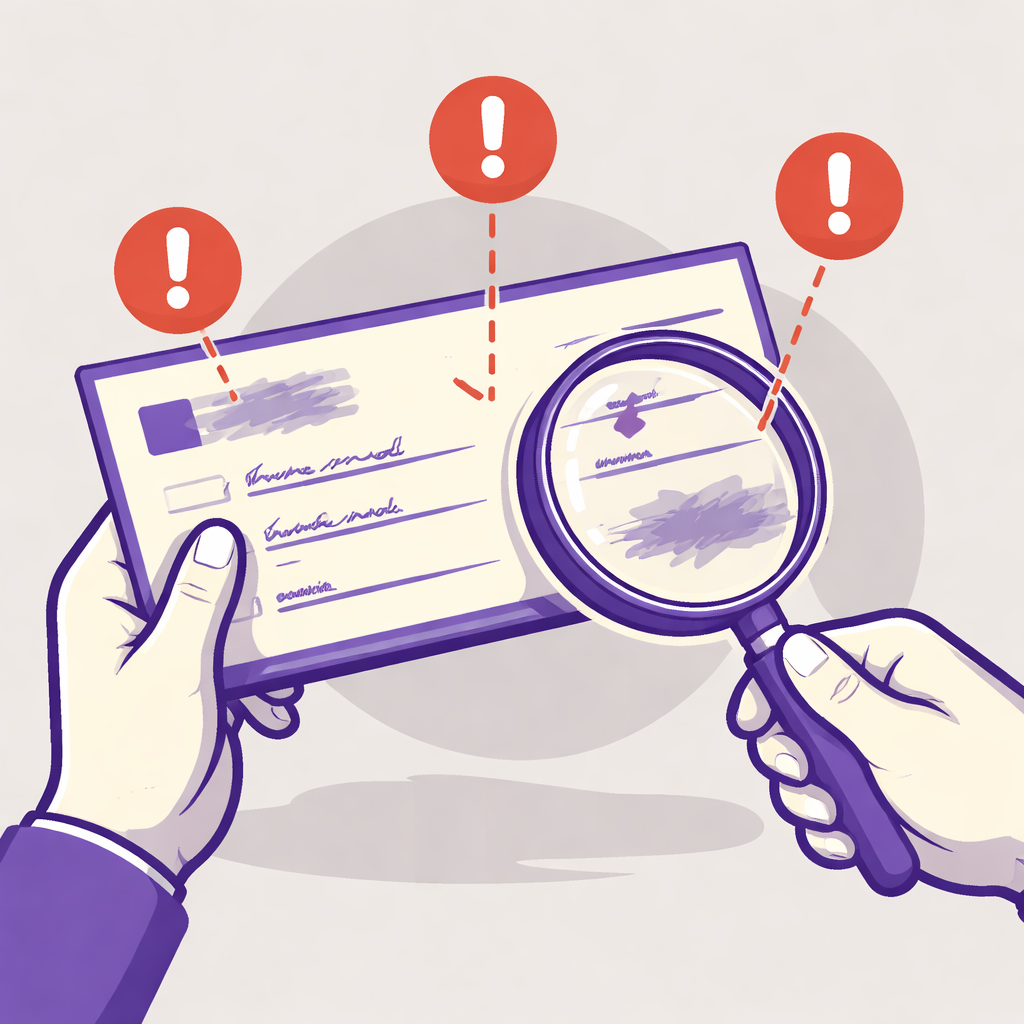
Illustration pour "Fake check fraud how to spot in the first 60 seconds"
Visual signs of a counterfeit cashier check or bank check
A counterfeit cashier check may look polished, but close inspection often reveals inconsistencies. Fraudsters rely on the fact that most people do not know what to examine.
Check the physical and printed details carefully:
- Bank logo looks stretched, pixelated, or poorly aligned
- Fonts differ across sections of the same check
- Signature line appears copied or printed unnaturally
- MICR line at the bottom looks uneven or glossy
- Check number is missing, duplicated, or out of place
- Paper feels thin, overly smooth, or unlike standard check stock
- Security features appear printed rather than embedded
Here is a practical comparison table:
Fake check signs vs normal check characteristics
| Feature | Likely genuine check | Possible fake check |
|---|---|---|
| Print quality | Sharp, consistent text and alignment | Blurry text, uneven spacing, faded areas |
| Paper | Standard check stock with security feel | Thin paper or glossy printout feel |
| Bank details | Consistent address and contact info | Old, mismatched, or incomplete bank details |
| Amount fields | Written and numeric amounts match cleanly | Corrections, odd spacing, or inconsistent handwriting |
| Buyer identity | Matches the payer and transaction | Different name, company, or unrelated issuer |
| Security elements | Subtle and integrated | Obvious imitation or low-quality copies |
Details people often miss
Look at the context, not just the paper. If a private buyer sends a cashier’s check from a company name, another state, or a person unrelated to the conversation, that mismatch matters.
Also review the memo line and issue date. Strange references, future dates, or generic notes can signal a manufactured document rather than a legitimate payment.
Fake check fraud how to spot in private sales
Check fraud private sale cases are common because sellers often deal with strangers, time pressure, and high-value items. Cars, motorcycles, laptops, phones, collectibles, and furniture are frequent targets.
The scam usually follows a predictable script:
- The buyer agrees quickly with little negotiation
- They cannot meet in person for a plausible reason
- They send a check, often for more than the sale amount
- They ask you to pay a shipper, mover, or agent
- They pressure you to release the item fast
This pattern is especially dangerous in vehicle sales. A seller may sign over documents or arrange transport before the bank finishes rejecting the check.
Safer habits for private sellers include:
- Meet locally when possible
- Verify the buyer’s identity before discussing payment
- Avoid accepting checks from unknown parties for urgent sales
- Do not refund overpayments under any circumstances
- Do not hand over goods based only on pending deposit status
- Use a secured payment flow for higher-value peer-to-peer transactions
A technical intermediation platform can reduce risk by structuring identity checks, messaging records, and a secured payment flow, with payment services provided by Stripe. That is often safer than relying on a paper check from an unknown buyer.
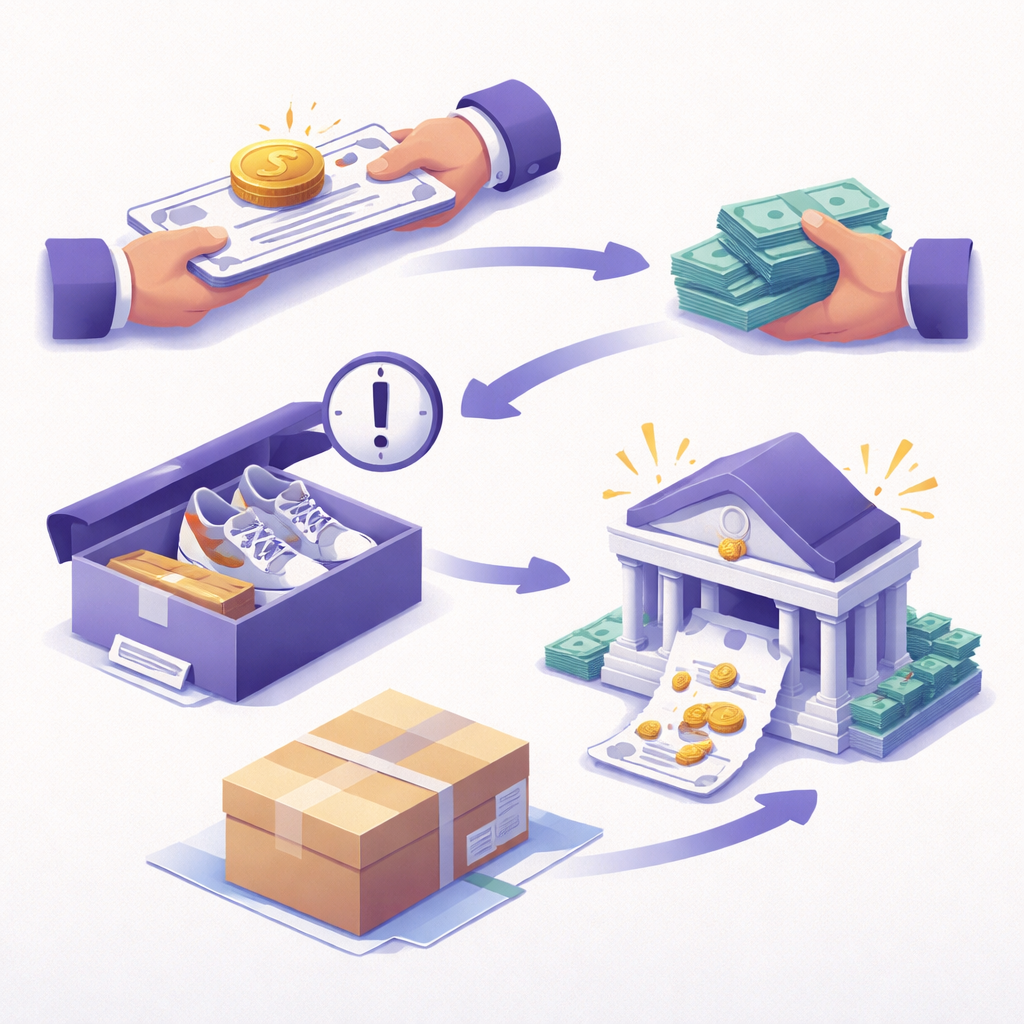
Illustration pour "Fake check fraud how to spot in private sales"
Why a deposited check can still bounce days later
One of the most misunderstood parts of this scam is bank availability. When you deposit a check, part or all of the amount may appear in your account before the bank has fully confirmed the check is genuine.
That timing gap is where scammers win. They push you to ship the item or send money back while the bank is still processing the document through its verification systems.
Important facts to remember:
- “Funds available” does not always mean “check verified”
- Cashier’s checks can also be forged or altered
- Final detection may take days or longer depending on the case
- If the check is fake, the bank can reverse the deposit
- You are usually responsible for money you sent out meanwhile
This is why scammers create urgency. They know that once you wait for true confirmation, the scheme becomes much harder to complete.
How to verify a suspicious check safely
If you receive a check and something feels wrong, verification should happen before any goods or money move. The goal is to confirm both the instrument and the person behind it.
Use this step-by-step process:
- Compare the buyer’s name, address, and phone number with the check issuer
- Search the bank’s official contact information independently
- Call the bank using the number from its official website, not the check alone
- Ask whether the check number, amount, and issue details can be reviewed
- Confirm whether the payer relationship makes sense for the transaction
- Keep written records of messages, shipping requests, and payment instructions
Do not rely on:
- A phone number provided only by the buyer
- Screenshots of transfers or bank messages
- Emails that claim the check is “bank certified” without direct verification
- Pressure to act before your own checks are complete
If you are selling a high-value item, consider alternatives to paper checks. A secured payment flow through a technical intermediation platform can create a clearer transaction record, reduce impersonation risk, and avoid many of the weaknesses of check-based deals.
When payment is processed digitally, payment services provided by Stripe can support a more structured transaction path than accepting a paper instrument from a stranger.
Questions to ask the buyer
Before accepting any check, ask direct questions and note how the buyer responds:
- Why are you paying by check instead of a standard digital method?
- Why does the payer name differ from your name?
- Why is a third party involved in pickup or shipping?
- Why is the amount higher than the agreed price?
A legitimate buyer usually answers clearly and consistently. A scammer often becomes vague, defensive, or more urgent.
Fake check fraud how to spot when the story sounds urgent
Urgency is one of the strongest fraud signals because it is designed to shut down your normal review process. The scammer wants you to focus on speed, sympathy, or convenience instead of verification.
Common urgency stories include:
- Military deployment or offshore work
- Family emergency or medical issue
- Last-minute relocation
- A shipping company already scheduled for pickup
- An assistant or agent handling everything remotely
These stories are effective because they sound plausible and discourage face-to-face contact. In many cases, the emotional pressure is the real tool, while the check is only the vehicle.
Watch for language such as:
- “I need this done today”
- “The movers are already paid”
- “Please deposit now and send the balance”
- “You can trust it, it’s a cashier’s check”
- “I’m unavailable to call, just text”
Slow the process down on purpose:
- Require identity confirmation
- Refuse overpayments
- Decline third-party pickup arrangements tied to check payments
- Wait for independent verification before making any commitment
What to do if you already deposited a fake check
If you think you deposited a fake check, act immediately. Fast reporting can limit the damage and create a record that helps your bank and, if needed, law enforcement.
Take these steps right away:
- Contact your bank or credit union fraud department
- Explain that you suspect a counterfeit or altered check
- Ask whether the deposit is under review and whether any outgoing transfers can be stopped
- Stop all communication that pressures you to send money or release goods
- Do not spend the deposited amount
- Save texts, emails, shipping labels, and the check image
If the transaction involved a marketplace or classified ad platform, report the buyer there as well. If you shared personal data, monitor for identity theft risks.
You should also document:
- Buyer name and contact details
- Dates and times of messages
- Tracking numbers or pickup arrangements
- Screenshots of payment claims or instructions
If you have not yet shipped the item, do not proceed. If you already shipped it, contact the carrier immediately to see whether delivery can be stopped or redirected.
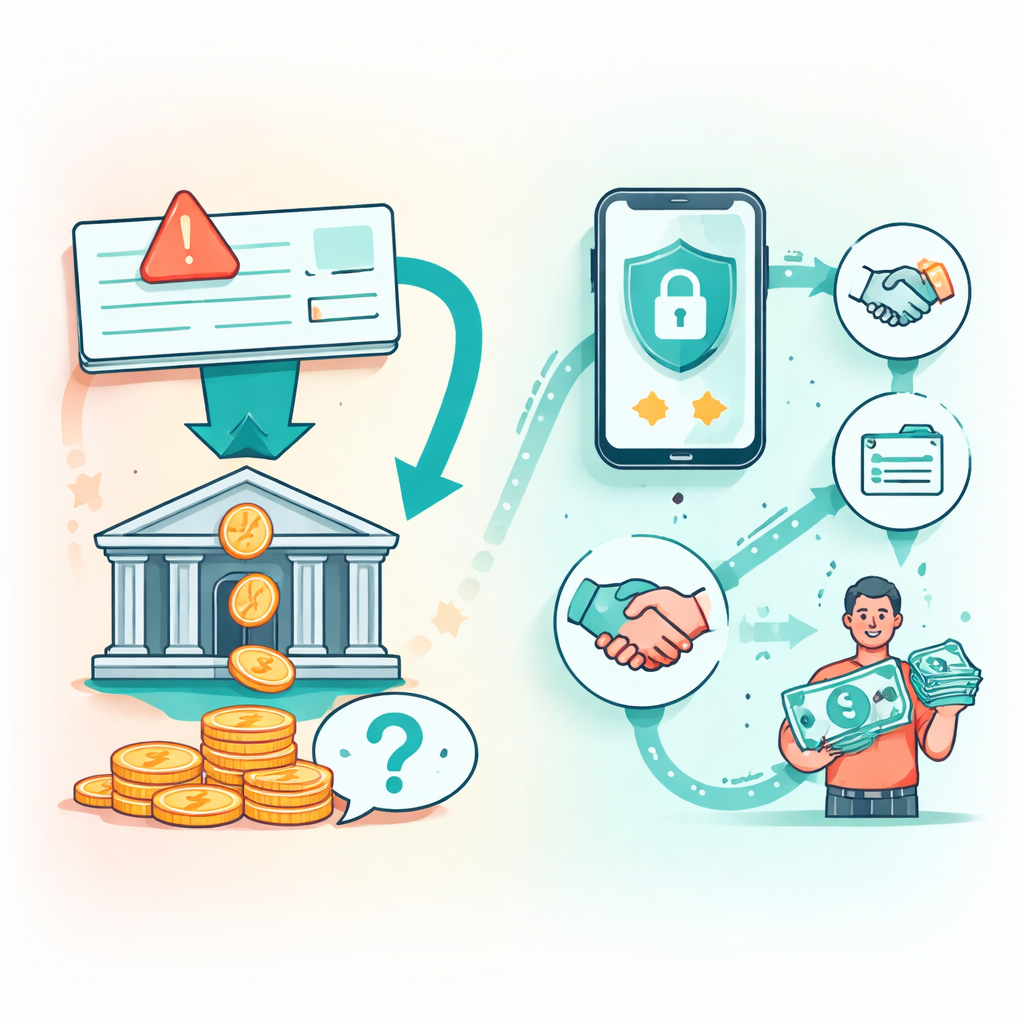
Illustration pour "What to do if you already deposited a fake check"
Safer alternatives to accepting checks from strangers
For high-risk peer-to-peer transactions, the safest approach is often to avoid paper checks entirely. Checks are slow to verify, easy to counterfeit visually, and commonly used in overpayment scams.
Safer options depend on the transaction, but they generally include:
- In-person payment methods with identity verification
- Bank-assisted transfer methods confirmed independently
- A technical intermediation platform with a secured payment flow
- Clear transaction records, messaging history, and buyer-seller verification steps
For online or remote private sales, structure matters as much as payment method. A platform that organizes the transaction path can reduce confusion, preserve evidence, and lower the chance that one party acts on a false payment signal.
TrustProtect is a technical intermediation platform for secure peer-to-peer transactions. Payment services are provided by Stripe, which supports a secured payment flow better suited to modern private sales than relying on a paper check from an unknown buyer.
Here is a simple comparison:
Checks vs structured digital transaction flows
| Method | Main risk | Practical advantage |
|---|---|---|
| Paper check from stranger | Counterfeit, reversal, overpayment scam | Familiar but high fraud exposure |
| Cash in person | Safety and counterfeit currency concerns | Immediate if handled carefully |
| Direct transfer without structure | Impersonation or confirmation fraud | Fast but depends on verification |
| Technical intermediation platform with secured payment flow | Requires both parties to follow process | Better records, clearer steps, reduced ambiguity |
Questions fréquentes
How can I tell if a cashier’s check is fake?
A fake cashier’s check may show blurry printing, mismatched payer details, unusual paper quality, or a bank identity that does not fit the transaction. The safest approach is independent verification with the issuing bank using official contact details, not just what appears on the check.
Can a fake check show up in my bank account as deposited?
Yes. A check can appear as deposited and even show available funds before final verification is complete. That is why fake check fraud how to spot always includes waiting for true confirmation before shipping goods or sending any refund.
What are the most common fake bank check signs?
The most common fake bank check signs are overpayment, urgency, third-party pickup, mismatched names, and poor print consistency. Suspicious behavior from the buyer is often as important as the check’s appearance.
Is check fraud common in private sales?
Yes, check fraud private sale scams are common on marketplaces and classified ad platforms, especially for cars, electronics, and furniture. Scammers target sellers who are willing to accept remote payment and release the item quickly.
What should I do if someone overpays me with a check?
Do not refund any amount and do not continue the transaction until the check is independently verified. Overpayment is a classic fraud tactic designed to make you send real money before the check is rejected.
Can banks verify a suspicious check for me?
Banks may review certain details, but policies vary and they may not fully confirm authenticity in every case. You should still contact the issuing bank through official channels and avoid acting on the deposit until concerns are resolved.
What is safer than accepting a check from a stranger online?
For remote peer-to-peer transactions, a technical intermediation platform with a secured payment flow is often safer than accepting a paper check. Payment services provided by Stripe can support a more structured process with clearer records than an unverified check transaction.
Conclusion
Fake check fraud how to spot comes down to recognizing patterns, not just inspecting paper. If a buyer overpays, creates urgency, avoids meeting, or asks you to send money before final verification, assume the transaction is risky until proven otherwise.
The safest response is to slow down, verify independently, and avoid releasing goods based only on a pending deposit. In higher-value private sales, a technical intermediation platform with a secured payment flow is generally more reliable than trusting a paper check from a stranger.
Quick recap:
- A deposited check is not automatically a verified check
- A counterfeit cashier check can look legitimate
- Overpayment and refund requests are major warning signs
- Fake bank check signs include mismatched details, poor print quality, and urgency
- Check fraud private sale scams often involve shipping agents or remote pickup
- Structured digital transaction processes are usually safer than paper checks
If you remember one rule, make it this: never send money, release an item, or pay a third party until the payment path is fully verified. That is the most practical way to stop fake check fraud how to spot from becoming an expensive lesson.
Protect your next transaction with TrustProtect
Payment held by Stripe until validation. Buyer protected, seller paid upon validation.
Create a free accountReady to secure your next transaction?
TrustProtect organizes a secure journey between buyer and seller. Payment via Stripe, validation on the platform.