
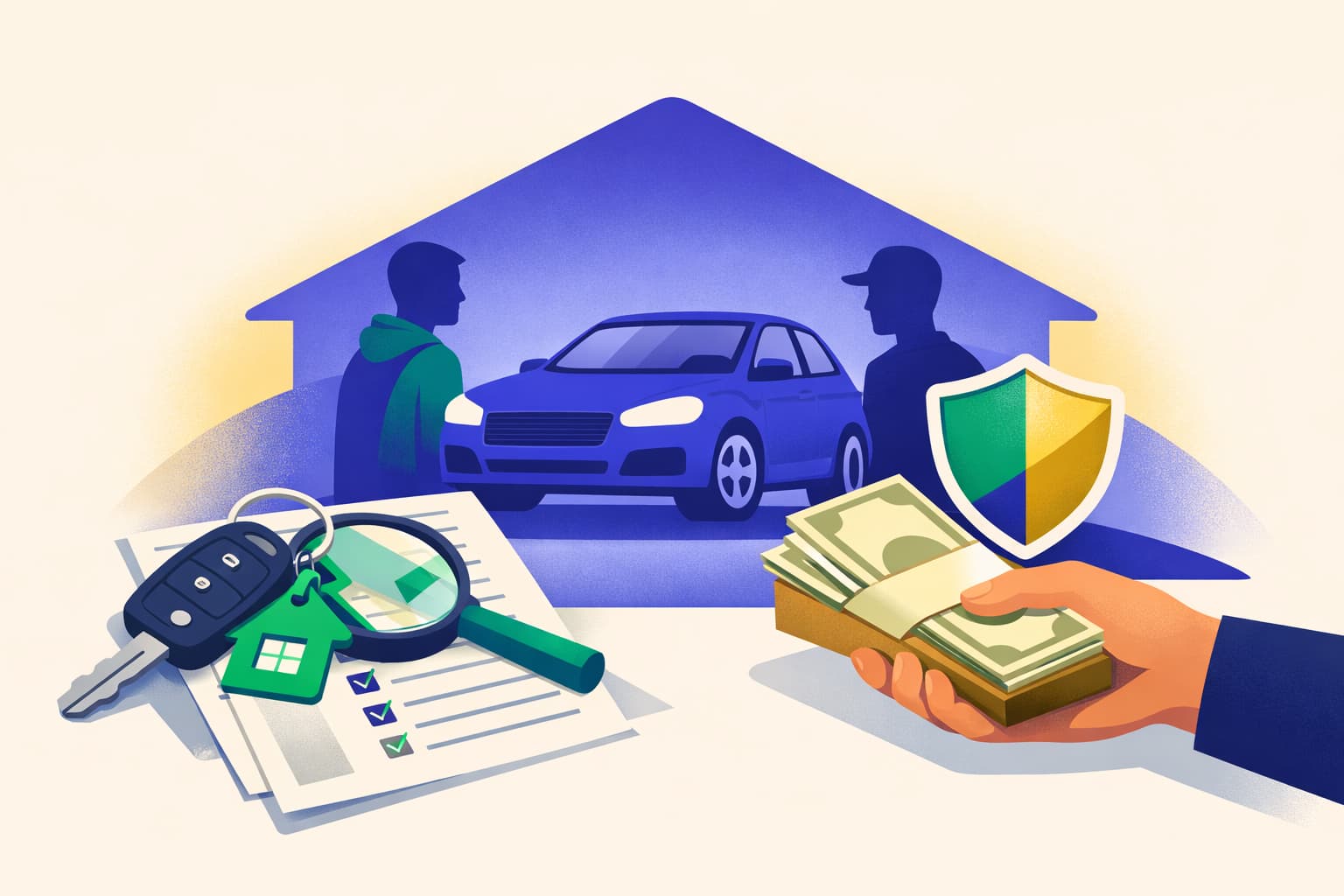
How to Safely Buy a Used Car From a Private Seller
A practical guide to checking the seller, the vehicle, the paperwork, and the payment process before you buy a used car privately.
How to Safely Buy a Used Car From a Private Seller
How to safely buy a used car from a private seller starts with reducing risk before money changes hands. A private sale can offer better prices than a dealership, but it also puts more responsibility on the buyer to verify the vehicle, the seller, and the documents. If you follow a structured process, you can avoid common scams, hidden defects, and paperwork problems. This guide explains the checks that matter most and how to complete a more secure transaction.
Why how to safely buy a used car from a private seller matters
Buying from a private owner can save money, but it usually comes with fewer protections than buying from a licensed dealer. There may be no warranty, limited recourse after the sale, and more room for fraud if you skip verification.
The biggest risks are not always obvious during the first meeting. A car can look clean and still have title issues, undisclosed accident damage, unpaid liens, odometer inconsistencies, or a seller who is not legally entitled to sell it.
Common private-sale risks include:
- A forged or altered title
- A VIN that does not match the paperwork
- Hidden mechanical defects
- Odometer rollback
- Existing finance or lien problems
- Pressure to pay quickly without inspection
- Fake shipping or deposit scams
A careful process also helps honest sellers. When both sides know what documents will be reviewed and how the transaction will be completed, the sale becomes faster, clearer, and less stressful.
Start with seller verification before you inspect the car
One of the best buying car private seller tips is simple: verify the seller before you spend time on the vehicle. If the person cannot prove identity and ownership, the rest of the deal should stop there.
Ask the seller for basic information in advance. You do not need sensitive details beyond what is necessary to confirm that the person you meet is the registered owner or is legally authorized to sell the vehicle.
What to confirm before meeting
Ask for the following before arranging an inspection:
- Full name of the seller
- Phone number and a stable way to communicate
- Vehicle make, model, year, and VIN
- Current title status
- Odometer reading
- Whether there is any outstanding loan or lien
- Service history and accident disclosure
If the seller refuses to share the VIN before the meeting, treat that as a warning sign. A legitimate seller should understand why a buyer wants to run history checks first.
How to verify the seller at the meeting
When you meet, compare the seller’s photo ID with the name on the title and registration. If the names do not match, ask for a clear legal explanation and supporting documents.
Be cautious if:
- The seller says they are selling for a friend or relative
- The title is unsigned, incomplete, or recently reassigned multiple times
- The meeting location changes repeatedly at the last minute
- The seller avoids direct answers about ownership
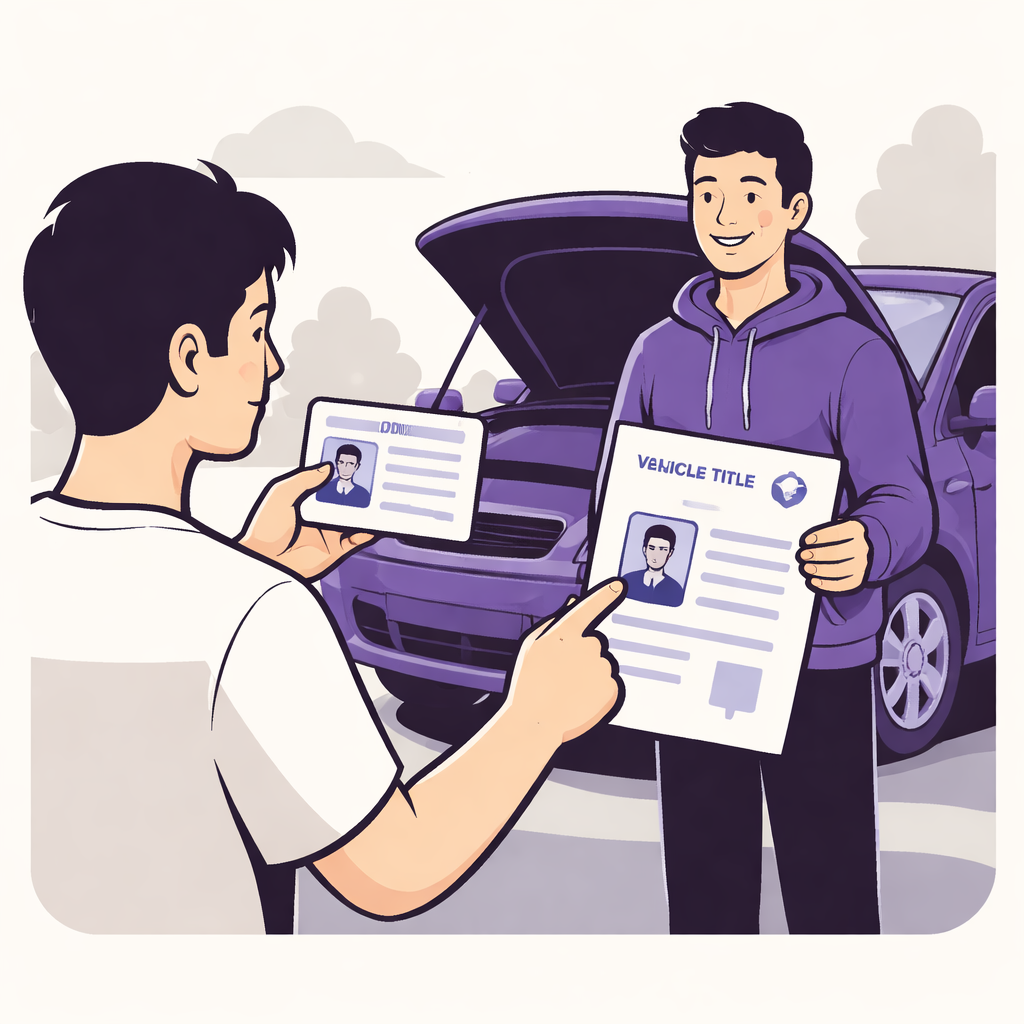
Illustration pour "Start with seller verification before you inspect the car"
Use a complete used car private sale checklist
A structured used car private sale checklist reduces missed details. It also helps you compare multiple cars objectively instead of making a rushed decision based on appearance alone.
Your checklist should cover the vehicle, the paperwork, the seller, and the transaction process. If one area fails, the deal may not be worth pursuing even if the price looks attractive.
Vehicle checklist
Inspect these core points:
- VIN on dashboard, door sticker, and title
- Tire wear consistency
- Body panel alignment and paint differences
- Windshield and glass condition
- Lights, indicators, and electronics
- Fluid levels and visible leaks
- Engine start from cold if possible
- Brakes, steering, suspension, and transmission behavior
- Warning lights on the dashboard
- Signs of flood, fire, or structural damage
Bring a flashlight and take your time. Small inconsistencies often reveal larger issues.
Paperwork checklist
Review these documents before committing:
- Title in the seller’s name
- Current registration
- Service and maintenance records
- Emissions or inspection certificates if required locally
- Loan payoff documentation if there is financing
- Bill of sale requirements in your state or country
- Any warranty transfer documents if still applicable
A missing service file is not always a deal-breaker, but missing title documentation often is.
Transaction checklist
Before sending any money, confirm:
- Final agreed price
- What is included in the sale
- Date and place of handover
- Which documents will be signed
- How identity will be checked
- How the secured payment flow will work
- When keys, title, and vehicle possession will transfer
Check the VIN, title, and vehicle history carefully
If you want to know how to safely buy a used car from a private seller, focus heavily on the VIN and title. These two elements reveal whether the seller can legally sell the car and whether the vehicle has a history that changes its value or safety.
Start by comparing the VIN everywhere it appears. It should match on the dashboard, driver-side door area, registration, title, and any history report you obtain.
What the title should tell you
The title should show the legal owner and any branding or restrictions. Depending on your jurisdiction, branding may indicate salvage, rebuilt, flood, lemon, or other significant history.
Watch for these title red flags:
- Seller name does not match ID
- Title appears altered or damaged
- Missing signatures where required
- Lienholder listed without proof of payoff
- Salvage or rebuilt branding not disclosed in the listing
- Out-of-state paperwork with unclear transfer history
What a history report can reveal
A vehicle history report can help identify:
- Reported accidents
- Title branding events
- Odometer inconsistencies
- Number of prior owners
- Registration history
- Some service or maintenance entries
- Theft records in certain databases
A clean report is useful, but not perfect. Not every accident or repair is reported, so you still need an independent inspection.
How to handle a lien or financed vehicle
If the seller still owes money on the car, proceed carefully. Ask for official payoff information from the lender and a clear explanation of how title transfer will happen once the loan is settled.
This is where a documented process matters. A technical intermediation platform can support a secured payment flow while payment services are provided by Stripe, helping both parties align on verification and transaction steps.
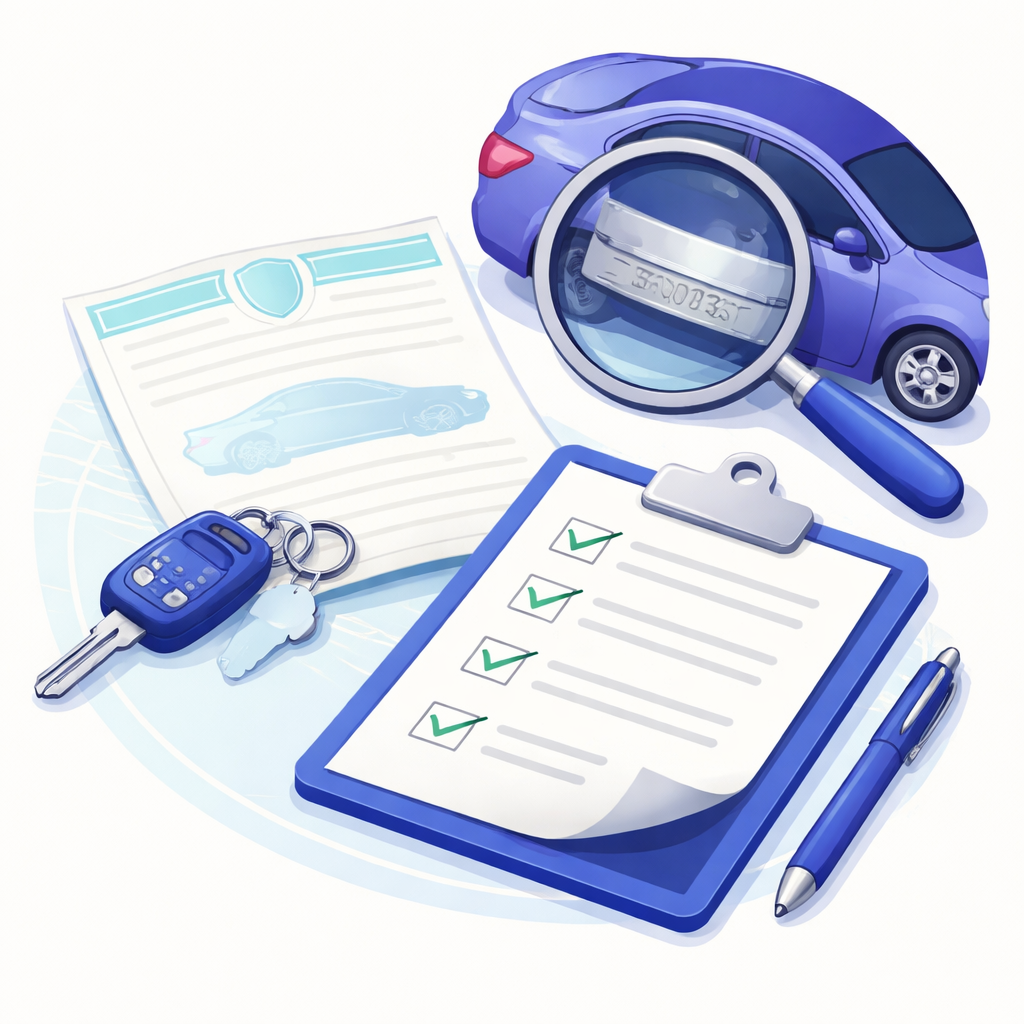
Illustration pour "Check the VIN, title, and vehicle history carefully"
Inspect the car like a buyer, not like a fan
Many buyers lose leverage because they fall in love with the car too early. Private car sale safety improves when you inspect methodically and stay skeptical until the evidence supports the asking price.
Try to inspect the car in daylight and on a dry surface. Dirt, darkness, and rain can hide scratches, rust, leaks, and uneven bodywork.
Exterior and interior checks
Look for signs of previous repairs or neglect:
- Mismatched paint shades
- Uneven gaps between panels
- Rust around wheel arches, under doors, or underbody areas
- Moisture, mold, or unusual smells inside the cabin
- Seat, pedal, and steering wheel wear that seems inconsistent with mileage
- Broken switches, screens, locks, or climate controls
Interior wear can tell you a lot about how the car was used. A low-mileage claim should generally match the condition of high-contact surfaces.
Mechanical checks you can do yourself
Even without being a mechanic, you can check basics:
- Start quality when cold
- Idle smoothness
- Smoke from the exhaust
- Brake response
- Steering pull or vibration
- Transmission shift quality
- Suspension noises over bumps
- Fluid color and level where visible
- Battery age and condition
If anything feels off, assume there is a reason. The goal is not to diagnose everything yourself, but to identify whether a professional inspection is essential before moving forward.
Always get an independent pre-purchase inspection
A pre-purchase inspection is one of the strongest answers to how to safely buy a used car from a private seller. It gives you an expert opinion that is separate from the seller’s claims and your own limited visual checks.
Choose a reputable mechanic or inspection service with no connection to the seller. If the seller refuses an independent inspection, that is often enough reason to walk away.
What an inspection should cover
A good inspection usually includes:
- Engine and transmission condition
- Brake and suspension wear
- Signs of accident or frame damage
- Tire condition and alignment clues
- Fluid leaks and cooling system issues
- Diagnostic scan for stored fault codes
- Safety-related defects
Ask for a written report. It can help you negotiate the price or decide the car is not worth the risk.
When to walk away
Consider leaving the deal if the inspection reveals:
- Structural or frame damage
- Severe rust in critical areas
- Major engine or transmission faults
- Flood-related corrosion or electrical issues
- Odometer concerns
- Repair costs that erase the price advantage
Test-drive with a plan and verify real-world behavior
A test drive should do more than confirm that the car moves. It should help you evaluate how the vehicle behaves under normal conditions and whether the seller’s description matches reality.
Drive on different road types if possible. A short loop around the block rarely reveals enough.
What to test during the drive
Pay attention to:
- Cold start behavior
- Acceleration smoothness
- Brake performance and noise
- Steering alignment and feedback
- Transmission shifts at low and highway speeds
- Suspension noise over rough roads
- Cruise stability at higher speed
- Air conditioning, heating, and infotainment operation
Turn off the radio and listen. Unusual sounds often become obvious only when the cabin is quiet.
Questions to ask after the drive
After the test drive, ask direct follow-up questions:
- Has this issue happened before?
- When was the last major service?
- Are there any warning lights that come and go?
- Has the car ever been in an accident?
- Why are you selling now?
Consistent, detailed answers are a good sign. Vague or defensive responses deserve more scrutiny.
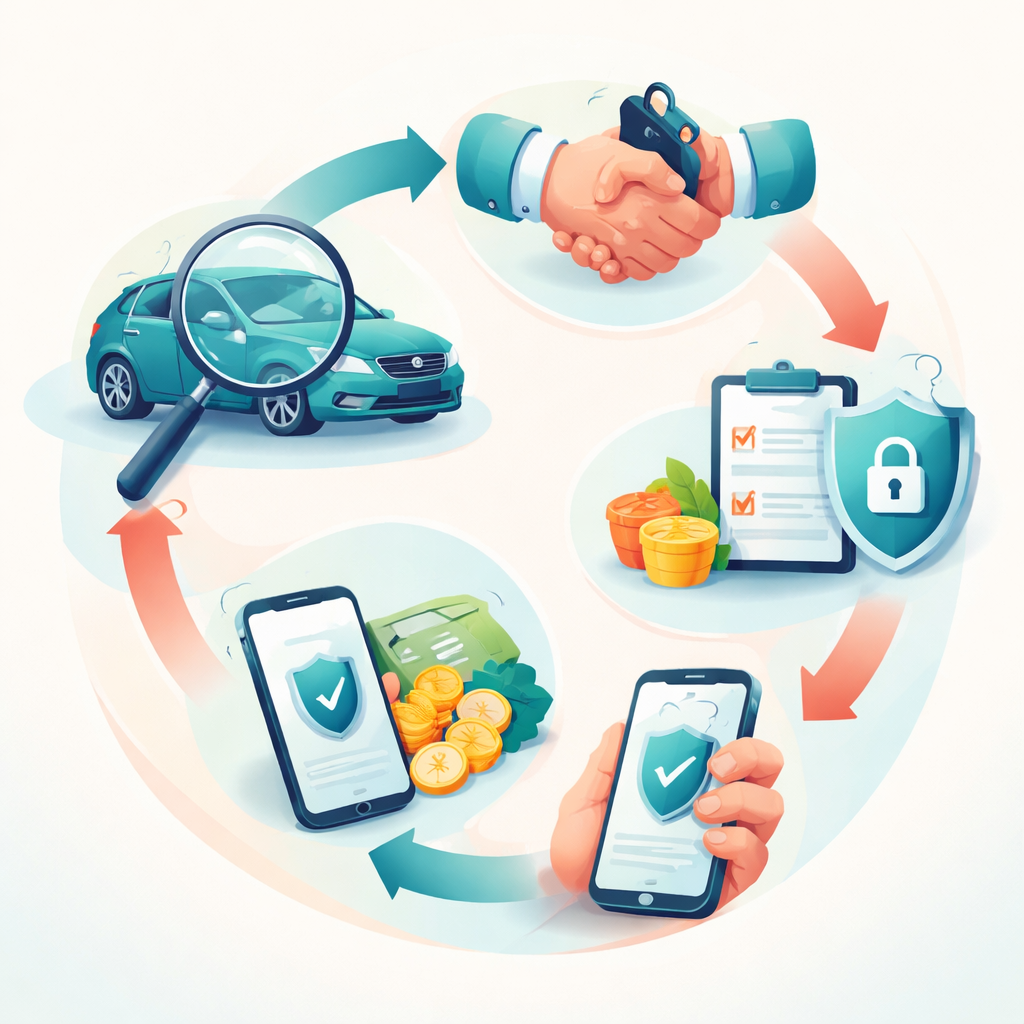
Illustration pour "Test-drive with a plan and verify real-world behavior"
Handle documents and payment with a safer process
Private car sale safety depends heavily on the final transaction stage. This is where rushed buyers make expensive mistakes by sending deposits too early, paying before documents are verified, or accepting unclear handover terms.
The safest approach is to document each step and use a secured payment flow. TrustProtect is a technical intermediation platform, and payment services are provided by Stripe through Stripe Connect Express.
Best practices before payment
Before any payment is made, confirm:
- Seller identity has been checked
- Title and VIN match
- Inspection is completed or consciously waived
- Final price is written down
- Bill of sale requirements are known
- Any lien payoff process is documented
- Handover conditions are agreed
Avoid cash-heavy transactions with no paper trail. A documented process reduces disputes and helps both parties understand when each step is complete.
What a safer transaction flow looks like
A more secure private sale often follows this order:
- Buyer and seller verify identity
- Vehicle details and documents are reviewed
- Inspection and test drive are completed
- Final price and conditions are confirmed in writing
- Payment is initiated through a secured payment flow
- Signed documents, keys, and vehicle possession are handed over according to the agreed process
This structure is especially useful for higher-value transactions or when buyer and seller do not know each other.
Comparison of payment approaches
| Payment approach | Main advantage | Main risk |
|---|---|---|
| Cash in person | Immediate and simple | Theft risk, poor traceability, counting disputes |
| Bank transfer between individuals | Traceable and familiar | Timing issues, reversal concerns in some situations, weak process coordination |
| Secured payment flow via a technical intermediation platform | Better transaction structure, clearer verification steps, documented process | Requires both parties to follow the platform workflow |
Red flags that should stop the deal immediately
Some problems can be investigated further. Others should end the conversation at once. Knowing the difference is one of the most practical buying car private seller tips.
If several red flags appear together, assume the risk is higher than the discount is worth.
High-risk warning signs
Walk away if you notice any of these:
- Seller refuses to show ID
- Name on title does not match seller and no valid explanation exists
- VIN on the car does not match the paperwork
- Seller pressures you to pay before inspection
- Price is far below market with no credible reason
- Title is missing, altered, or incomplete
- Seller insists on unusual payment methods
- Vehicle history and seller story do not align
- Meeting location feels unsafe or constantly changes
A good deal should survive basic verification. If it does not, it is not a good deal.
Low-price traps in private sales
An unusually low price often signals one of three things:
- Hidden mechanical issues
- Title or legal ownership problems
- A scam designed to create urgency
Compare the asking price with similar local listings. If the gap is large, ask why and verify every claim with documents.
Final steps after you agree to buy
Once you decide to proceed, finish the transaction carefully. The last stage should be administrative, not emotional.
Make sure every required document is signed correctly and that you understand your local registration, tax, insurance, and plate-transfer rules before driving away.
What to collect at handover
At the time of handover, collect:
- Signed title
- Bill of sale
- Odometer disclosure if required
- Lien release if applicable
- Registration documents where relevant
- Service records and manuals
- All keys and remotes
Take photos of the documents and the vehicle condition at pickup. This creates a useful record if questions arise later.
What to do right after purchase
After the sale, do these tasks quickly:
- Arrange insurance coverage
- Register the vehicle within the legal deadline
- Transfer title as required
- Change locks or reset digital access if relevant
- Schedule baseline maintenance
- Keep copies of all transaction records
Questions fréquentes
How do I safely buy a used car from a private seller?
To safely buy a used car from a private seller, verify the seller’s identity, confirm the title and VIN match, review vehicle history, get an independent inspection, and use a documented secured payment flow. Do not pay until ownership and paperwork checks are complete.
What documents should I check in a private car sale?
Check the title, registration, seller ID, service records, lien payoff documents if applicable, and any bill of sale or odometer disclosure required in your area. The seller’s name should match the title unless there is clear legal proof of authority to sell.
Is buying a used car from a private seller risky?
It can be riskier than buying from a dealer because there is often no warranty and fewer formal protections. The main risks are fraud, title issues, hidden damage, and incomplete paperwork, which is why verification and inspection are essential.
Should I get a pre-purchase inspection for a private sale car?
Yes, in most cases. An independent inspection can reveal accident damage, mechanical faults, leaks, wear, and diagnostic issues that are easy to miss during a basic viewing or test drive.
What are the biggest red flags in a private car sale?
Major red flags include a seller who refuses ID, a title that does not match the seller, a VIN mismatch, pressure to pay quickly, missing paperwork, and a price that is far below market without a credible explanation. Any one of these can justify walking away.
What is the safest way to pay for a car from a private seller?
The safest option is a documented process with a secured payment flow after identity, ownership, and vehicle checks are completed. TrustProtect is a technical intermediation platform, and payment services are provided by Stripe, which helps structure the transaction more clearly.
Can I buy a car privately if there is still a loan on it?
Yes, but only with extra care. You need official payoff information from the lender and a clear process showing how the loan will be settled and when the title will be transferred to you.
Conclusion
Knowing how to safely buy a used car from a private seller is mostly about discipline. The safest buyers do not rush, do not skip inspections, and do not treat paperwork as a formality.
A private sale can still be a smart way to buy if you follow a clear process from first contact to final handover. Verify the seller, verify the car, document the deal, and use a secured payment flow supported by a technical intermediation platform, with payment services provided by Stripe.
Quick recap:
- Verify the seller’s identity and legal right to sell
- Match the VIN across the car, title, and history records
- Review title status, liens, and maintenance history
- Inspect and test-drive the vehicle in a structured way
- Get an independent pre-purchase inspection
- Document the final terms before payment
- Use a safer, traceable transaction process
If you apply these steps consistently, how to safely buy a used car from a private seller becomes much less uncertain and much more manageable.
Protect your next transaction with TrustProtect
Payment held by Stripe until validation. Buyer protected, seller paid upon validation.
Create a free accountReady to secure your next transaction?
TrustProtect organizes a secure journey between buyer and seller. Payment via Stripe, validation on the platform.