
Escrow Service for Private Car Sale: What to Use Instead
Buying or selling a car privately can be efficient, but payment risk is high. Here is how to secure the transaction, verify the vehicle, and avoid common scams.
Escrow Service for Private Car Sale: What to Use Instead
Escrow service for private car sale is a common search term, but many buyers and sellers use it to mean any secure way to complete a high-value vehicle transaction. In practice, what matters is using a verified process that protects both parties, confirms the car details, and reduces payment fraud. For private vehicle deals, a technical intermediation platform with payment services provided by Stripe can help structure a secured payment flow without relying on informal bank transfers or risky cash meetings. This guide explains what to check, what to avoid, and how to complete a safer private sale.
What people mean by escrow service for private car sale
When people search for escrow service for private car sale, they are usually looking for a neutral process that reduces risk for both buyer and seller. The goal is simple: avoid sending money directly to a stranger before the vehicle, documents, and identities have been checked.
In a private car transaction, the main risks are not only payment-related. They also include title issues, VIN inconsistencies, fake transport arrangements, and pressure tactics designed to make one party act too quickly.
A safer process usually includes:
- identity verification for buyer and seller
- vehicle information checks, including VIN and registration details
- a documented transaction timeline
- a secured payment flow through a trusted provider
- proof of delivery or in-person handover records
The phrase also overlaps with related searches such as:
- private sale escrow
- vehicle escrow service
- third-party payment car
- secure payment for used car purchase
- safe way to pay for a private vehicle
These searches all point to the same need: reducing uncertainty in a high-value peer-to-peer sale. That is why the best solution is not a vague promise of safety, but a documented workflow with clear verification steps.
Why private car sales create more risk than standard online purchases
A private car sale is different from buying a low-cost item online. The amount is higher, the paperwork matters, and the consequences of fraud can be significant for both parties.
Unlike a standard ecommerce checkout, a vehicle sale often involves:
- title transfer documents
- registration and tax considerations
- inspection history
- mileage verification
- pickup, delivery, or transport coordination
That complexity is exactly why a simple bank transfer is often not enough.
Illustration pour "What people mean by escrow service for private car sale"
How a secure private vehicle transaction should work
A secure private vehicle transaction follows a sequence, not a single payment event. The strongest setups combine identity checks, vehicle validation, documented agreement terms, and a controlled payment path.
If you are comparing a vehicle escrow service or a third-party payment car solution, focus on the process rather than the label. A good workflow should make it difficult for either side to disappear, change terms, or rely on fake evidence.
A typical secure flow includes:
- Buyer and seller agree on the vehicle, price, and conditions.
- Both parties submit identifying information.
- Vehicle details are reviewed, including VIN, title status, and supporting documents.
- Payment is initiated through a secured payment flow.
- Handover or delivery takes place according to agreed terms.
- Both parties keep a record of the completed transaction.
This structure is useful whether the car is sold locally or remotely. The exact documents may vary by jurisdiction, but the logic remains the same: verify first, pay through a secure process, then complete handover.
What buyers should verify before sending any money
Buyers should confirm that the vehicle exists, that the seller has the right to sell it, and that the car matches the listing. A professional-looking ad is not evidence.
Before payment, check:
- the VIN on the car and on the documents
- title or ownership certificate details
- service history consistency
- mileage records
- accident disclosures
- whether finance or liens remain attached to the vehicle
Ask for a live video call if the sale is remote. During the call, request specific actions, such as showing the VIN plate, starting the engine, and displaying the dashboard mileage.
What sellers should verify before releasing the car
Sellers also face serious risk, especially from fake transfer confirmations and stolen payment credentials. Never assume a screenshot means the transaction is complete.
Sellers should verify:
- the buyer's identity
- the agreed amount and terms in writing
- that payment is progressing through the expected secured flow
- pickup identity if a transporter or third party is involved
- signed transfer documents at handover
A seller should also avoid releasing keys, title, or possession based only on email messages that appear to come from a payment provider.
Why direct bank transfers and cash can fail in a private sale
Many fraud cases happen because the payment method looks familiar. Bank transfers, cash, and cashier's checks may seem straightforward, but each creates specific vulnerabilities in a private vehicle deal.
For a private sale escrow alternative to be useful, it must reduce those vulnerabilities rather than simply move them elsewhere.
Here is a comparison of common payment methods in private car sales:
| Payment method | Main advantage | Main risk | Best use case |
|---|---|---|---|
| Cash | Immediate and simple | Theft, counterfeit notes, personal safety risk | Low-value local transactions only |
| Bank transfer | Common and traceable | Fake proof of transfer, timing issues, recall misunderstandings | Local deals with bank-side confirmation |
| Cashier's check | Familiar for larger amounts | Counterfeit checks, delayed discovery of fraud | Only with bank verification in person |
| Secured payment flow via technical intermediation platform | Structured process and clearer transaction steps | Requires both parties to follow the platform workflow | Higher-value private vehicle sales |
Cash meetings can also create pressure. People often skip document checks because they are standing in a parking lot trying to finish quickly.
Direct transfers create a different problem: one party may believe the money is final while the other is relying on incomplete or fake confirmation. That gap is where many scams happen.
Why screenshots are not proof of payment
Fraudsters frequently send edited banking screens, fake email receipts, or forged transfer references. These are designed to create urgency and push the seller to hand over the vehicle.
Real confirmation should come from the verified transaction process itself, not from a PDF, screenshot, or forwarded message.
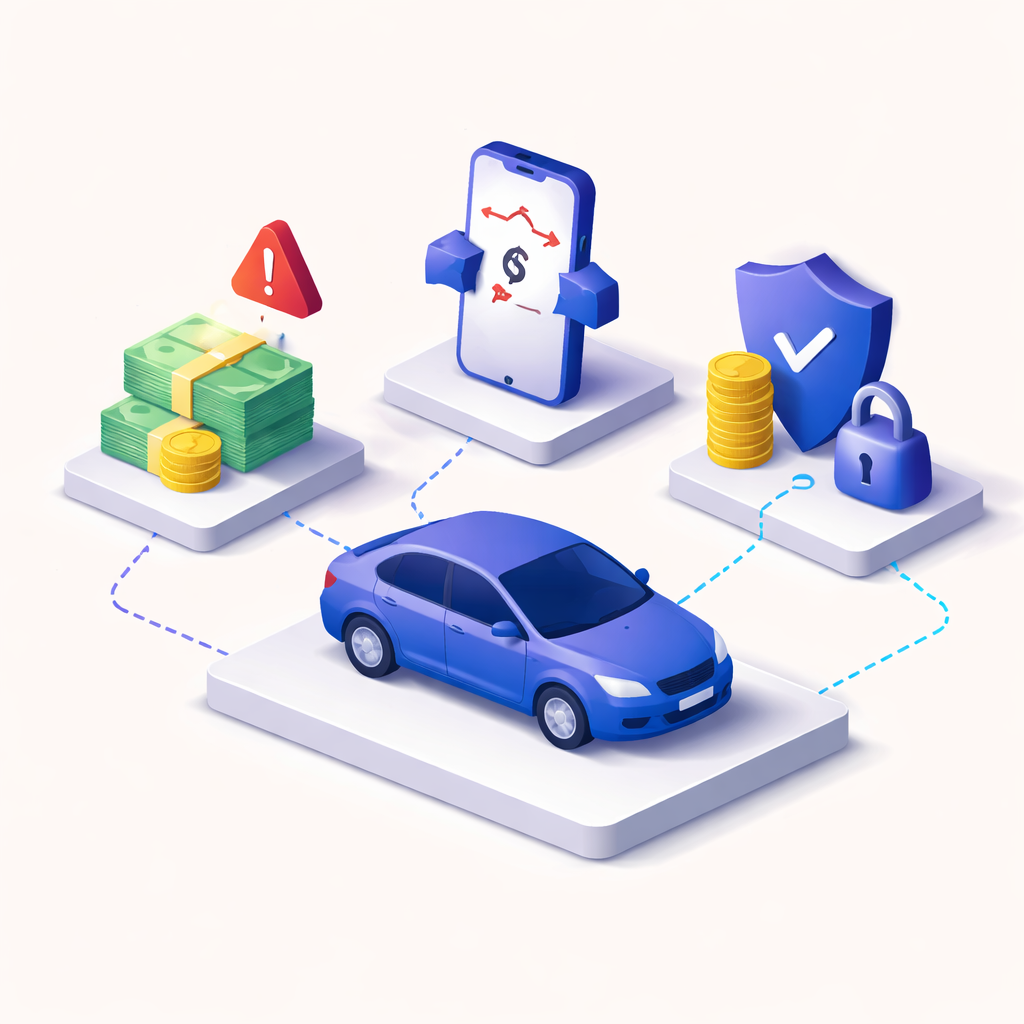
Illustration pour "Why direct bank transfers and cash can fail in a private sale"
How TrustProtect supports a safer escrow service for private car sale workflow
TrustProtect is a technical intermediation platform designed to make peer-to-peer transactions more secure. For a private car sale, it helps structure the transaction with a documented process and a secured payment flow, while payment services are provided by Stripe.
This matters because the transaction is not just about moving money. It is about reducing ambiguity between two private parties who may never have dealt with each other before.
TrustProtect can support a safer workflow by helping organize:
- buyer and seller participation in the same transaction flow
- agreed transaction terms and milestones
- supporting documentation exchange
- a secured payment flow with payment services provided by Stripe
- a clearer record of the transaction steps
For users searching escrow service for private car sale, the practical value is having a structured process that reduces common failure points. That includes confusion over timing, missing documentation, and fake payment evidence.
A technical intermediation platform is especially useful when:
- the buyer and seller are in different cities
- the sale amount is significant
- the vehicle will be collected by a third party
- one side wants a documented process rather than informal messaging
- both parties want a neutral transaction framework
What makes a secured payment flow more reliable
A secured payment flow is more reliable because it is tied to a defined transaction context. Instead of relying on disconnected emails, text messages, and screenshots, both parties follow one process.
That process should make it easier to confirm:
- who the parties are
- what vehicle is being sold
- what amount was agreed
- what conditions apply to handover
- what evidence exists if a dispute arises later
Red flags that make any vehicle escrow service look suspicious
Fraudsters often use the language of security to lower your guard. They may mention a vehicle escrow service, a shipping company, or a buyer protection program that does not actually exist.
The warning signs are often visible early if you know what to look for.
Common red flags include:
- the seller claims to be abroad, deployed, or suddenly unavailable
- the buyer offers full price immediately without asking normal questions
- the platform name in emails does not match the real website domain
- the transaction is pushed through messaging apps only
- the other party refuses a live call or avoids showing documents clearly
- the shipping company is presented as handling both car delivery and payment confirmation
- the price is far below market value without a credible reason
You should also be cautious if the other party insists that a transporter will inspect the car, collect it, and somehow validate payment at the same time. Those roles should not be blurred.
If you are evaluating a third-party payment car process, verify the company independently. Do not use phone numbers or links sent only by the other party.
How to verify that a platform is real
Start with the domain, legal information, and public presence. A real service should have a consistent website, transparent terms, and verifiable business details.
Check:
- whether the domain matches all communications
- whether the company has clear legal pages and contact details
- whether the process is explained in plain language
- whether payment services are clearly identified
- whether support can be reached through official channels
Step-by-step checklist for buyers and sellers
The best protection in a private car sale is preparation. A checklist reduces mistakes and helps both parties stay aligned from first contact to final handover.
If you are searching escrow service for private car sale, use the checklist below as your minimum standard.
Buyer checklist
- Confirm the seller's full identity.
- Request VIN, title images, and service records.
- Compare the VIN across the car, title, and listing.
- Ask for a live video inspection if remote.
- Check lien, finance, and accident history where available.
- Agree on exact terms in writing, including included accessories and documents.
- Use a secured payment flow rather than sending funds informally.
- Inspect the car at handover before signing final documents.
Seller checklist
- Confirm the buyer's identity.
- Keep all listing details and messages archived.
- State the exact sale terms in writing.
- Do not rely on screenshots or forwarded payment emails.
- Verify the pickup person's identity if different from the buyer.
- Prepare title transfer and bill of sale documents correctly.
- Record mileage and condition at handover.
- Keep copies of signed documents.
Shared checklist
- Agree on who pays transport, taxes, and fees.
- Define where and when handover happens.
- Confirm what happens if the car does not match the description.
- Keep communication on the verified platform whenever possible.
- Avoid last-minute changes to account details or delivery address.
Documents commonly needed in a private car sale
The exact paperwork depends on the country or state, but some documents appear in most vehicle sales. Missing paperwork is not a minor issue; it can stop registration or expose one side to later claims.
Common documents include:
- title or ownership certificate
- bill of sale
- government-issued ID
- maintenance records
- emissions or inspection certificate where required
- lien release if applicable
- odometer disclosure where required by law
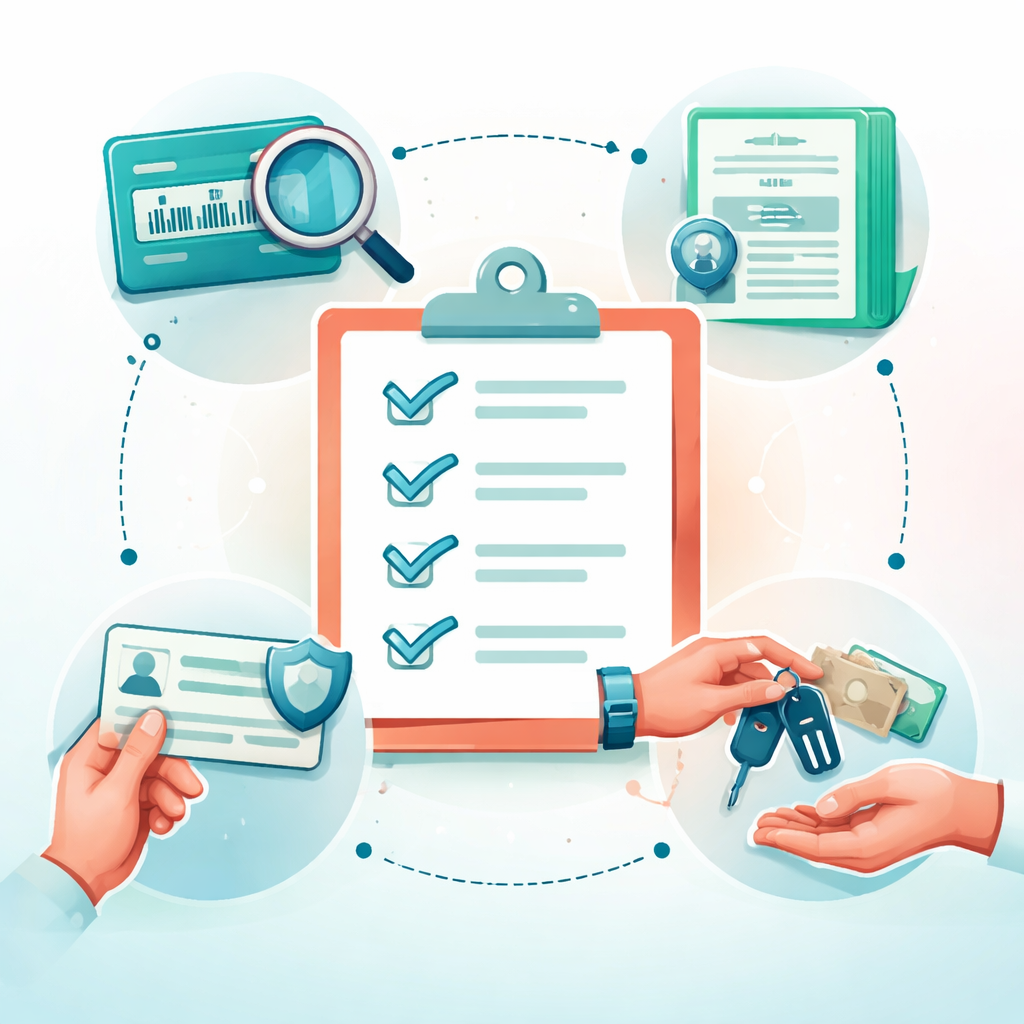
Illustration pour "Step-by-step checklist for buyers and sellers"
Local sale vs remote sale: which needs more protection?
Both local and remote transactions carry risk, but remote sales usually need more structure. Distance makes it easier to fake identity, hide vehicle condition, and create confusion around delivery.
That is why many people searching for private sale escrow are actually trying to solve a remote-sale problem.
Here is a practical comparison:
| Scenario | Main risk | Recommended safeguards |
|---|---|---|
| Local private sale | Pressure to complete quickly, counterfeit cash, incomplete paperwork | Meet in a safe place, verify ID, inspect documents, use a secured payment flow |
| Remote private sale | Fake vehicle, fake seller, shipping fraud, document mismatch | Live video verification, VIN checks, written terms, documented handover, secured payment flow |
| Sale via transporter | Wrong pickup person, condition disputes, delivery confusion | Verify transporter identity, record vehicle condition, keep signed collection evidence |
Remote sales simply add more points of failure. That makes process discipline even more important.
When a remote sale can still be reasonable
A remote sale can be reasonable when the car is rare, the buyer is experienced, and the process is properly documented. It becomes much safer when both parties accept verification steps instead of treating them as inconvenience.
At minimum, remote buyers should insist on a live walkaround, document review, and a structured payment and handover process.
How to choose the right third-party payment car solution
Not every payment tool is suitable for a private vehicle transaction. The right third-party payment car solution should support clarity, traceability, and a documented process between two private parties.
When comparing options, look for these criteria:
- clear explanation of the transaction flow
- transparent identification of the payment provider
- support for high-value peer-to-peer transactions
- strong documentation and communication records
- straightforward user verification steps
- no reliance on unverifiable email-only confirmations
A good solution should also fit the practical realities of a car sale. That means helping both parties manage timing, documents, and handover conditions rather than acting like a generic payment button.
Ask these questions before using any platform:
- Who provides the payment services?
- How are buyer and seller identified?
- What transaction records are created?
- How is vehicle information linked to the transaction?
- What evidence exists if one party disputes the handover?
If a service cannot explain its process clearly, do not use it for a high-value car deal.
Questions to ask before committing to any platform
You should understand the process before you list the car or send any funds. If the answers are vague, that is already useful information.
Ask:
- What steps happen before payment is initiated?
- What information must both parties provide?
- How is the vehicle described in the transaction record?
- What should happen at pickup or delivery?
- What official support channels exist if something goes wrong?
Questions fréquentes
What is the safest way to pay for a car in a private sale?
The safest approach is a structured transaction process that verifies the buyer, seller, and vehicle before completion. For higher-value deals, a technical intermediation platform with a secured payment flow and payment services provided by Stripe is generally safer than informal transfers, cash, or screenshots used as proof.
Is an escrow service for private car sale always necessary?
Not always, but a secure process becomes much more important as the vehicle value and transaction complexity increase. If the sale is remote, involves transport, or includes a party you do not know, a documented workflow is strongly recommended.
How do I avoid scams when buying a used car from a private seller?
Verify the seller's identity, inspect the VIN and title, review service history, and request a live video walkaround if the sale is remote. Do not send money based on pressure, unusually low pricing, or fake payment and shipping messages.
Can a third party help secure a private car payment?
Yes. A third-party payment car solution can reduce risk when it provides a documented transaction flow, identity checks, and a secured payment process. The key is choosing a real platform with transparent terms and payment services clearly identified.
What documents should I check before paying for a used car privately?
Check the title or ownership certificate, VIN, bill of sale terms, maintenance records, lien release if applicable, and any required inspection or emissions documents. The details should be consistent across the listing, the car, and the paperwork.
Are bank transfer screenshots valid proof in a private vehicle sale?
No. Screenshots and forwarded emails are easy to fake and should never be treated as final proof. Real confirmation should come through the verified transaction process and official channels.
Conclusion
Searching for an escrow service for private car sale usually means you want one thing: a safer way to complete a high-value transaction with someone you may not know. The best answer is not blind trust in a label, but a structured process that verifies identity, checks vehicle documents, and uses a secured payment flow.
TrustProtect supports that approach as a technical intermediation platform, with payment services provided by Stripe. For buyers and sellers alike, the goal is to reduce uncertainty, document each step, and avoid the common traps that make private vehicle deals risky.
Key takeaways:
- verify buyer, seller, and vehicle details before payment
- avoid cash pressure, fake transfer screenshots, and vague shipping arrangements
- use a documented process for remote or high-value sales
- confirm title, VIN, and handover terms in writing
- choose a vehicle escrow service alternative that supports the full transaction, not just payment
A careful process is what makes a private car sale safer. If you treat escrow service for private car sale as a search for structure, verification, and traceability, you will make better decisions and avoid most preventable fraud.
Protect your next transaction with TrustProtect
Payment held by Stripe until validation. Buyer protected, seller paid upon validation.
Create a free accountReady to secure your next transaction?
TrustProtect organizes a secure journey between buyer and seller. Payment via Stripe, validation on the platform.