
Vehicle Odometer Fraud: How to Detect Tampered Mileage
A practical guide to spotting odometer rollback signs, checking records, and verifying whether a vehicle’s mileage is genuine before you buy.
Vehicle Odometer Fraud: How to Detect Tampered Mileage
Vehicle odometer fraud how to detect is a critical question for anyone buying a used car, van, or motorcycle. A rolled-back odometer can make a vehicle look newer, more valuable, and less worn than it really is. That creates financial risk, safety concerns, and future repair costs for the buyer. The good news is that mileage fraud often leaves clues in documents, wear patterns, service history, and digital records.
What vehicle odometer fraud how to detect really means
Odometer fraud happens when a seller alters or misrepresents a vehicle’s mileage to make it appear less used. In practice, this usually means an odometer rollback, but it can also involve false paperwork, missing records, or misleading listings.
For buyers, vehicle odometer fraud how to detect is not just about reading the number on the dashboard. It is about checking whether that number matches the vehicle’s real age, condition, maintenance history, and digital footprint.
Mileage matters because it affects:
- Market value
- Expected maintenance costs
- Warranty status
- Perceived reliability
- Safety-related wear on key components
A car showing 62,000 miles may be priced very differently from the same car at 142,000 miles. If the mileage is false, the buyer may overpay and inherit hidden mechanical wear.
Modern fraud can be mechanical or digital. Older vehicles may show signs of physical tampering, while newer vehicles can be altered through electronic tools that change mileage stored in one or more modules.
That is why a visual inspection is useful, but not enough on its own. A proper verification process combines paperwork, physical evidence, and a professional scan when possible.
Why mileage fraud still happens
Mileage strongly influences resale price, especially in private-party sales. A dishonest seller may reduce the displayed mileage to justify a higher asking price or to make a high-use vehicle easier to sell.
Vehicles commonly targeted include:
- Older used cars with incomplete records
- Imported vehicles with fragmented history
- Fleet or rental vehicles
- High-mileage diesel cars and vans
- Luxury vehicles where mileage heavily affects value
Most common odometer rollback signs buyers should know
The clearest odometer rollback signs appear when the displayed mileage does not fit the vehicle’s overall condition. A low-mileage car should usually show limited wear, consistent service intervals, and a believable ownership history.
If the dashboard says 45,000 miles but the car looks and feels like it has done far more, that mismatch deserves attention. Spotting odometer fraud often starts with these practical inconsistencies.
Look for these common warning signs:
- Worn pedals, steering wheel, or gear selector despite low displayed mileage
- Driver’s seat sagging, torn, or heavily creased on a supposedly low-mileage vehicle
- Door handles, buttons, and infotainment controls showing excessive wear
- Service stickers or oil-change labels showing mileage higher than the odometer
- Maintenance records with missing years or unexplained gaps
- Tire, brake, or suspension wear inconsistent with the displayed reading
- Listing language that avoids discussing history or maintenance
A single sign does not prove tampering. But several signs together can indicate tampered mileage or at least a need for deeper verification.
Pay close attention to replacement parts that seem too new for the stated mileage. For example, if a car allegedly has 30,000 miles but already has a replaced steering wheel, new seat upholstery, and fresh pedal covers, ask why.
Some sellers also rely on buyer assumptions. They may never directly say the mileage is verified, but they present the vehicle in a way that encourages trust without supplying proof.
Interior wear clues that often reveal high use
Interior wear is one of the fastest ways to sense whether the mileage is believable. While driving style and maintenance vary, heavy contact points usually age in a predictable way.
Check these areas carefully:
- Pedal rubber worn smooth
- Steering wheel shine, peeling, or flattening
- Seat bolster collapse on the driver’s side
- Faded switchgear icons
- Loose hinges, latches, or armrests
Exterior and mechanical clues
Exterior condition can also help. Stone chips, headlight haze, suspension noise, and underbody wear may suggest much higher road use than the odometer shows.
Also compare the age of consumables:
- Brake disc wear
- Tire date codes and replacement history
- Shock absorber condition
- Clutch wear on manual vehicles
- Engine bay grime and hose aging
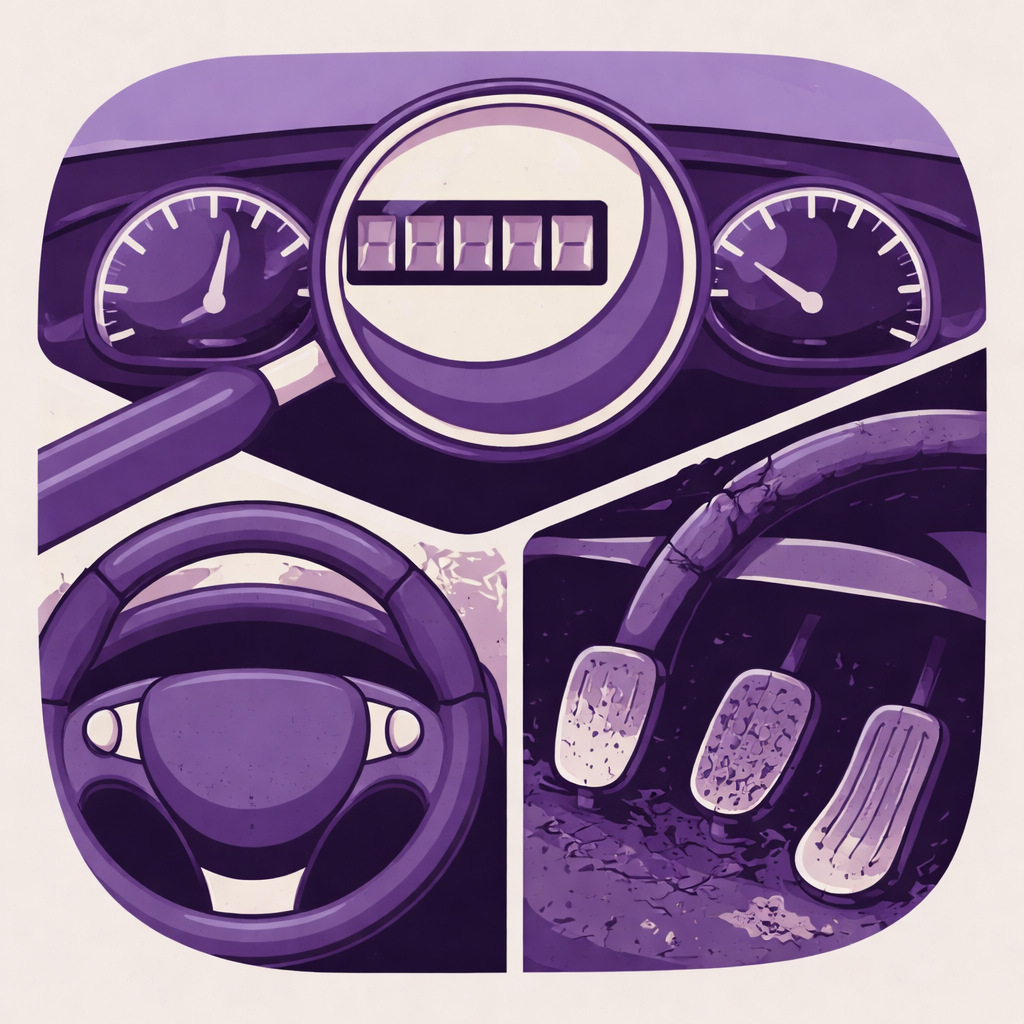
Illustration pour "Most common odometer rollback signs buyers should know"
How to verify mileage through records and history checks
Documents are often the strongest defense against mileage fraud. If you want to know vehicle odometer fraud how to detect in a reliable way, start by building a mileage timeline from every available record.
The goal is simple: the mileage should increase gradually and logically over time. Sudden drops, unexplained plateaus, or missing years are major red flags.
Check as many sources as possible:
- Service invoices
- Inspection or roadworthiness reports
- Registration documents
- Title history where available
- Warranty or dealer maintenance records
- Emissions test records
- Previous sale listings
- Fleet or lease disposal paperwork
Create a simple table to compare dates and mileage entries.
What a consistent mileage history looks like
A normal vehicle history shows mileage rising steadily every year. The annual increase may vary, but the pattern should make sense for the type of vehicle and its use.
Here is a simple comparison:
| Record pattern | What it suggests |
|---|---|
| 2019: 22,000 / 2020: 31,000 / 2021: 39,000 / 2022: 48,000 | Consistent and believable |
| 2019: 78,000 / 2020: 86,000 / 2021: 44,000 / 2022: 51,000 | Strong rollback suspicion |
| 2019: 35,000 / no records for 3 years / 2023: 37,000 | Missing history, needs proof |
Questions to ask the seller
Ask direct, neutral questions and note whether the answers stay consistent.
Useful questions include:
- Do you have service records from the previous owner?
- Has the instrument cluster ever been replaced?
- Can you show inspection reports with mileage readings?
- Why are there gaps in the maintenance history?
- Was the vehicle used for business, rental, or delivery work?
A legitimate seller may not know everything, but they should not become evasive when asked for basic mileage evidence.
Vehicle odometer fraud how to detect on modern digital dashboards
Many buyers assume digital odometers are impossible to alter. That is false. Modern vehicles can still show tampered mileage, especially when fraudsters use electronic tools to rewrite data in the dashboard or related control modules.
The challenge is that some vehicles store mileage in more than one place. If only one module is altered, a professional scan may reveal a mismatch between displayed mileage and data stored elsewhere.
Digital fraud may involve:
- Reprogramming the instrument cluster
- Replacing the dashboard unit
- Editing mileage in electronic control modules
- Importing a vehicle with incomplete digital history
- Hiding prior mileage through poor documentation
This is why a pre-purchase inspection by a qualified technician matters. A workshop with brand-specific diagnostic tools may be able to compare mileage-related data across modules and identify inconsistencies.
Ask for a diagnostic scan if the vehicle is high value, unusually low mileage for its age, or missing service history. The cost of the inspection is small compared with the risk of overpaying.
Also be cautious with imported vehicles. Cross-border history can be fragmented, and mileage records may not transfer cleanly between systems or databases.
When a diagnostic check is especially important
A professional scan is strongly recommended when:
- The vehicle is less than 10 years old and has a digital cluster
- The mileage is unusually low for the model year
- The service book is incomplete or freshly duplicated
- The car was recently imported
- The seller refuses independent inspection
These cases carry a higher risk of hidden mileage manipulation.
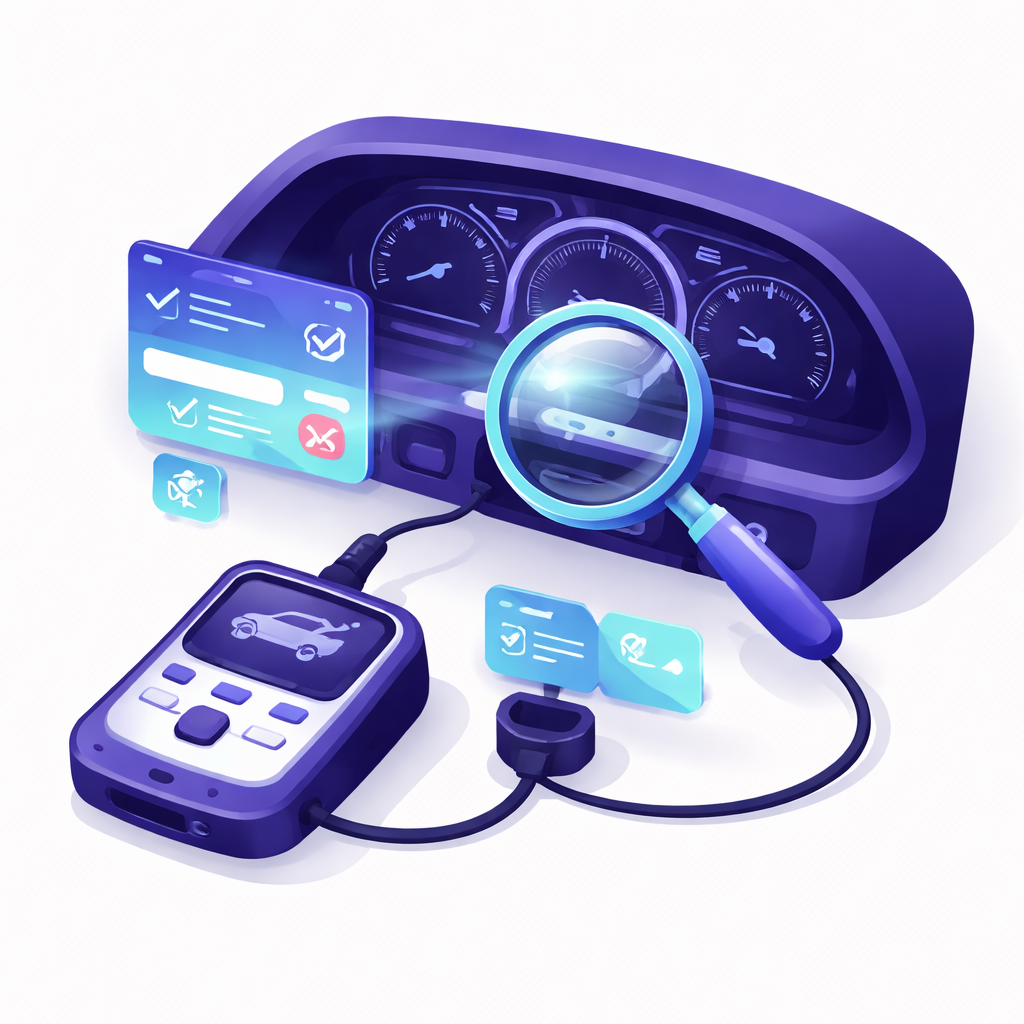
Illustration pour "Vehicle odometer fraud how to detect on modern digital dashboards"
How to inspect the car in person for spotting odometer fraud
An in-person inspection helps connect the paperwork to the physical condition of the vehicle. If you are serious about spotting odometer fraud, inspect the car in daylight and take your time.
Start with the dashboard and controls, then move to the driver contact points, bodywork, tires, and engine bay. The question is always the same: does this level of wear match the displayed mileage?
Use this practical checklist:
- Photograph the odometer reading
- Check warning lights at startup for unusual behavior
- Inspect pedal wear and steering wheel texture
- Examine seat bolsters and seat adjustment controls
- Look for mismatched screws or trim around the cluster
- Check tire wear and tire manufacturing dates
- Review service stickers under the hood or in the door frame
- Test all buttons, stalks, and switches for heavy-use wear
If the instrument cluster has scratches, loose trim, or tool marks around it, that can suggest prior removal. It does not prove fraud, but it raises the need for explanation.
During the test drive, listen for suspension knocks, transmission hesitation, clutch wear, and steering looseness. A supposedly low-mileage car should not usually feel mechanically tired unless there is another clear reason.
Bring a checklist or a second person if possible. Fraud is easier to miss when you are rushed or emotionally committed to the purchase.
Simple mismatch examples
These combinations deserve closer review:
- 40,000 miles shown, but a heavily polished steering wheel and worn seat bolster
- 55,000 miles shown, but multiple old service stickers above 90,000 miles
- 30,000 miles shown, but suspension and brake wear typical of a much older, heavily used car
- 70,000 miles shown, but no service history at all for many years
None of these proves fraud alone, but each is a strong prompt to verify further.
Best tools and sources to check for tampered mileage
You do not need to rely on one source. The safest method is to combine public records, seller documents, independent inspections, and online history research.
When checking for tampered mileage, use sources that create a timeline rather than a single snapshot.
Helpful sources include:
- Government inspection databases where available
- Vehicle history report providers
- Dealer service networks
- Independent garage invoices
- Manufacturer digital service records
- Previous online sale ads with archived mileage photos
- Diagnostic scans from a trusted mechanic
Here is how common sources compare:
| Source | Strength | Limitation |
|---|---|---|
| Service invoices | Dated mileage entries | Can be incomplete or missing |
| Inspection reports | Often official and periodic | Not available in every country |
| Vehicle history report | Fast overview | Data quality varies by market |
| Dealer records | Reliable when complete | May cover only part of the vehicle’s life |
| Diagnostic scan | Can reveal module inconsistencies | Requires professional access |
| Old sale listings | Useful for comparing prior mileage | Photos or listings may be unavailable |
A seller who welcomes independent verification is usually lower risk than one who pressures you to decide quickly. Time pressure is a common tactic in problematic sales.
Why archived listings can be surprisingly useful
Previous sale listings often include dashboard photos, mileage claims, and dates. If a car was advertised two years ago with higher mileage than it has today, that is an obvious warning sign.
Search by:
- Registration number where lawful
- VIN where available
- Make, model, color, and unique options
- Cached images or marketplace archives
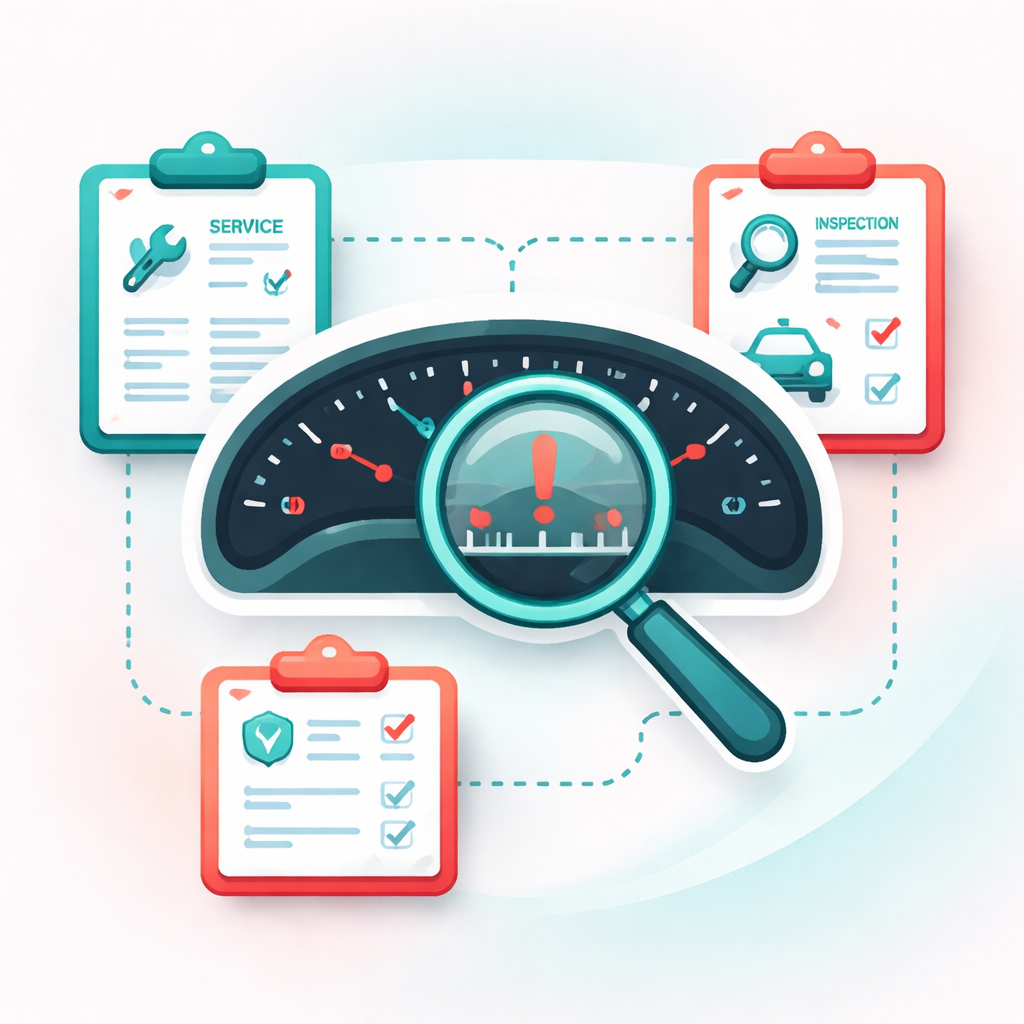
Illustration pour "Best tools and sources to check for tampered mileage"
What to do if you suspect odometer fraud before buying
If you suspect fraud, do not argue immediately or accuse the seller without evidence. Focus on verification, documentation, and reducing your risk.
The safest response is to pause the transaction until the mileage can be independently checked. In many cases, walking away is the best decision.
Take these steps:
- Ask for all service and inspection records in chronological order
- Request an independent pre-purchase inspection
- Compare the odometer with stickers, invoices, and digital records
- Ask whether the cluster was replaced and request proof
- Save screenshots of the listing and seller messages
- Do not pay a deposit until key questions are resolved
If the seller refuses inspection or becomes evasive, treat that as a strong warning sign. A legitimate seller may decline for practical reasons, but they should still be able to provide some evidence supporting the mileage.
When the transaction is remote, use a secure process for identity, vehicle, and document verification. For higher-risk private sales, a technical intermediation platform can help structure the exchange, while payment services are provided by Stripe through a secured payment flow.
Do not let a low price override missing proof. Fraudulent listings often look attractive precisely because they are designed to push quick decisions.
Documents to save before any payment
Keep a record of:
- The original listing
- Odometer photo
- VIN photo or document copy
- Service book images
- Inspection certificates
- Written statements from the seller about mileage
If a dispute later arises, this evidence is far more useful than memory.
How to reduce the risk of mileage fraud in private vehicle deals
Private sales are not automatically unsafe, but they require more discipline from the buyer. There is usually less formal process than at a dealer, so you need a structured method to verify the vehicle before committing.
To reduce risk, build your purchase process around evidence rather than impressions. That is the most practical answer to vehicle odometer fraud how to detect in real-world private transactions.
Use this framework:
- Verify the seller’s identity and ownership documents
- Match VIN, registration, and vehicle details exactly
- Review mileage history before viewing the car
- Inspect the vehicle in person or through an independent expert
- Confirm maintenance records and inspection reports
- Keep all communication in writing
- Use a documented transaction flow for remote or high-value deals
A technical intermediation platform can help organize verification steps, document exchange, and transaction clarity between private parties. For the payment step, payment services are provided by Stripe through Stripe Connect Express as part of a secured payment flow.
This matters because fraud risk often grows when the buyer and seller are in different locations. If you cannot inspect the car yourself, independent verification becomes even more important.
The best protection is consistency. If the seller identity, ownership, VIN, mileage records, and vehicle condition all align, the risk drops sharply. If one element does not fit, investigate before moving forward.
A simple pre-purchase risk filter
Consider the vehicle higher risk if three or more of these apply:
- Unusually low mileage for age
- Incomplete service history
- Imported vehicle with fragmented records
- Seller refuses inspection
- Signs of heavy wear despite low mileage
- Listing price well below market
- Dashboard or cluster appears disturbed
The more risk factors present, the more likely you should walk away.
Questions fréquentes
How can I tell if an odometer has been rolled back?
Look for mismatches between the displayed mileage, service records, inspection reports, and the vehicle’s physical wear. Common odometer rollback signs include worn pedals, tired seats, missing maintenance history, and mileage entries in old documents that are higher than the current odometer reading.
Can digital odometers be tampered with?
Yes, digital odometers can be altered with electronic tools. Tampered mileage may not be visible on the dashboard alone, which is why a professional diagnostic scan and record check are important.
What are the main signs of tampered mileage on a used car?
The main signs are inconsistent paperwork, excessive wear for the displayed mileage, suspiciously low mileage for the vehicle’s age, and evidence that the instrument cluster has been removed or replaced. No single sign proves fraud, but several together are a strong warning.
Is a vehicle history report enough to detect odometer fraud?
Not always. A history report is useful, but vehicle odometer fraud how to detect usually requires comparing multiple sources, including service invoices, inspection records, archived listings, and a physical or diagnostic inspection.
What should I do if I suspect odometer fraud before buying?
Pause the purchase and ask for full mileage documentation. Request an independent inspection, save the listing and seller messages, and do not send money until the discrepancy is resolved.
Can wear and tear reveal a rolled-back odometer?
Yes, wear patterns often help with spotting odometer fraud. A low-mileage vehicle should not usually have heavily worn pedals, a collapsed driver’s seat, faded controls, and mechanical fatigue unless there is a clear explanation.
Are imported cars more at risk for mileage fraud?
They can be, because records may be incomplete or spread across different systems and countries. That does not mean every imported car is risky, but it does mean you should verify mileage more carefully.
Conclusion
Knowing vehicle odometer fraud how to detect can save you from overpaying for a car with hidden wear, missing history, and higher future repair costs. The most reliable method is to compare the displayed mileage with documents, condition, and digital evidence rather than trusting the dashboard alone.
If the mileage story does not make sense, slow the process down. A legitimate sale can withstand questions, records checks, and an independent inspection.
Before you buy, remember this checklist:
- Compare mileage across service, inspection, and title records
- Look for odometer rollback signs in wear and tear
- Check for evidence of tampered mileage on digital and physical components
- Use a professional diagnostic scan when the risk is higher
- Save all listing details and seller statements in writing
- Walk away if the seller avoids verification
In short, vehicle odometer fraud how to detect comes down to consistency. When the paperwork, physical condition, and seller explanations all align, you can move forward with much more confidence.
Protect your next transaction with TrustProtect
Payment held by Stripe until validation. Buyer protected, seller paid upon validation.
Create a free accountReady to secure your next transaction?
TrustProtect organizes a secure journey between buyer and seller. Payment via Stripe, validation on the platform.