
How to Use a Third-Party Escrow Service for Individuals Safely
A practical guide for private buyers and sellers who want a safer transaction flow, clear verification steps, and fewer payment disputes online.
How to Use a Third-Party Escrow Service for Individuals Safely
How to use a third-party escrow service for individuals is a common question when two private parties want to reduce fraud risk in a high-value transaction. The idea is simple: add a neutral technical intermediary and a secured payment flow so neither side has to rely on blind trust alone. This matters for cars, collectibles, electronics, freelance deliverables, and other peer-to-peer deals where chargebacks, non-delivery, or misrepresentation can cause real losses. In this guide, you will learn how the process works, what to verify before paying, and how to choose a safer setup for individual transactions.
What how to use a third-party escrow service for individuals really means
When people search how to use a third-party escrow service for individuals, they usually want a safer way to buy or sell without sending money directly to a stranger. In practice, the process combines identity checks, transaction terms, delivery conditions, and a secured payment flow managed through a technical intermediation platform.
For individuals, this setup is useful when the transaction has one or more of these risk factors:
- The item is expensive or rare
- The buyer and seller have never met
- Shipping is involved
- The product must be inspected before final acceptance
- The service is delivered in stages or milestones
The key point is not the label people use, but the structure of the transaction. You need a documented process that defines who the parties are, what is being sold, what counts as successful delivery, and what happens if a dispute appears.
Many users also look for "online escrow how works" or "escrow process explained" because they want a simple model. The model is straightforward: the parties agree on terms, payment is initiated through a secured flow, the seller delivers, the buyer checks the item or service, and the transaction is completed according to the agreed conditions.
Who typically needs this setup
Individual buyers and sellers often use this type of process for transactions that are too risky for cash and too important for informal bank transfers. Common examples include:
- Used vehicles
- Luxury watches and jewelry
- Domain names and digital assets
- High-end electronics
- Furniture shipped across regions
- Freelance projects with milestone delivery
If the value is significant and the counterparty is unknown, a structured third-party process is usually worth considering.
How the online process works from start to finish
If you want the escrow process explained in plain English, think of it as a sequence of checkpoints. Each checkpoint reduces uncertainty before the next step happens.
A typical online transaction flow looks like this:
- The buyer and seller agree on the item, price, delivery method, and inspection period.
- Both parties create accounts and complete required verification.
- The transaction is created on the platform with the exact terms.
- The buyer completes the secured payment flow.
- The seller ships or delivers the item or starts the agreed service.
- The buyer confirms receipt and checks compliance with the agreed terms.
- The transaction is finalized according to the platform rules and payment provider process.
This is why online escrow how works is really a question about process control. The platform should make the steps visible, timestamped, and documented so both parties know what happens next.
A strong process also reduces common misunderstandings. For example, it should state whether delivery means "shipped," "received," or "received and inspected," because those are not the same thing.
What counts as a good transaction timeline
A reliable timeline should include clear deadlines for each stage. At minimum, define:
- Payment completion deadline
- Shipping deadline
- Tracking or proof-of-delivery requirement
- Buyer inspection period
- Dispute submission deadline
Without these dates, private transactions often fail because each party assumes a different timeline.
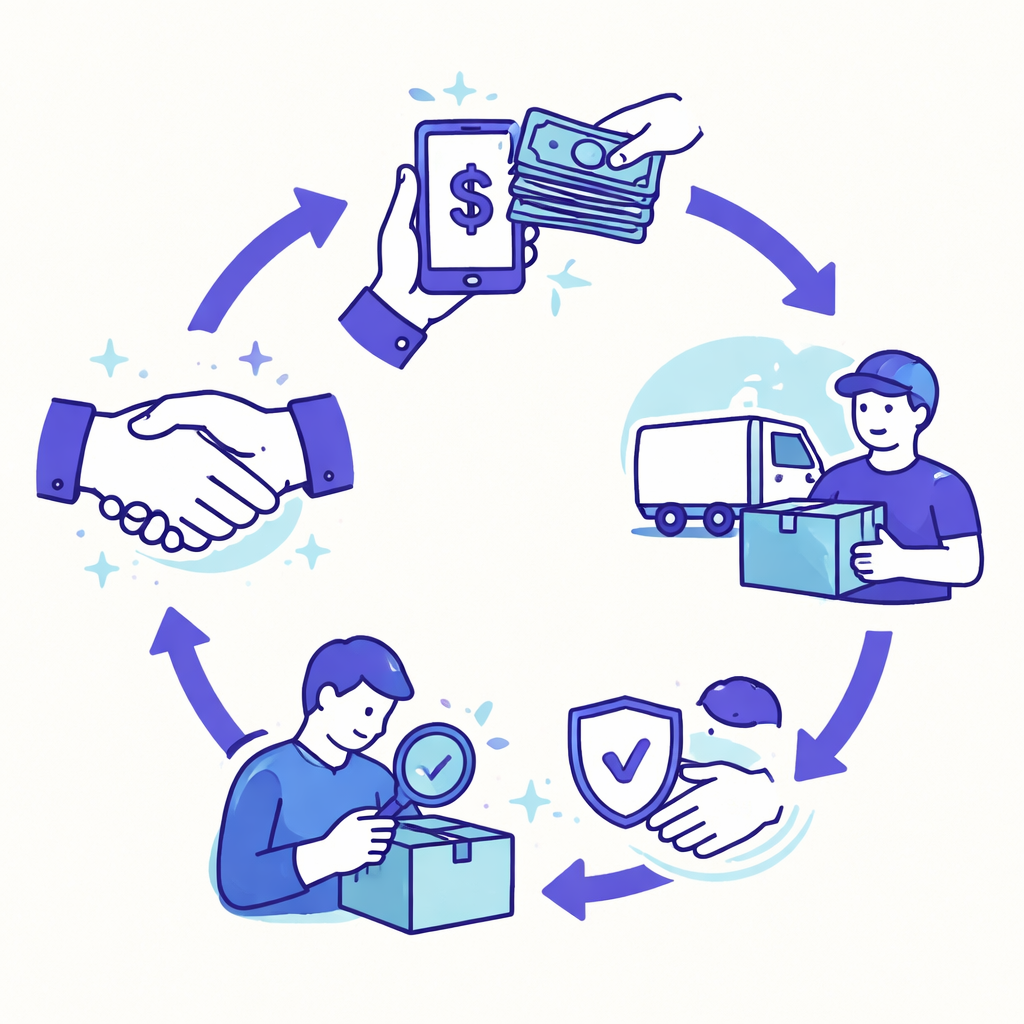
Illustration pour "How the online process works from start to finish"
Step 1: Verify the provider before you start an individual escrow setup
The first rule of individual escrow setup is simple: verify the provider before you verify the deal. Fraudsters often copy trusted brands, create fake websites, or send links that look legitimate but redirect to cloned payment pages.
Before using any platform, check the following:
- The exact domain name and HTTPS certificate
- Company registration details and legal pages
- Terms of service and dispute rules
- Who provides the payment services
- Customer support channels and response quality
- Independent reviews that mention real transaction scenarios
For TrustProtect, it is important to state the legal structure correctly. TrustProtect is a technical intermediation platform, and payment services are provided by Stripe through Stripe Connect Express.
If a website is vague about who handles payments, who verifies users, or how disputes are documented, treat that as a serious red flag. Legitimate providers explain the workflow in detail because transparency is part of the product.
Red flags that suggest a fake service
Stop immediately if you see any of these signs:
- The URL was sent only by private message and looks misspelled
- The site has no legal notice or company information
- The other party pressures you to act within minutes
- The provider asks for payment by crypto, gift cards, or direct wire outside the stated flow
- The support email uses a free mailbox instead of a company domain
- The transaction terms are missing or impossible to review before payment
Scammers rely on urgency and confusion. A real provider gives you time to read and confirm.

Illustration pour "Step 1: Verify the provider before you start an individual escrow setup"
Step 2: Define the transaction terms in writing
A secure transaction depends on precise terms. If the item description is vague, the inspection standard is unclear, or the delivery method is not specified, disputes become much harder to resolve.
Before the buyer pays, both parties should agree on:
- Full description of the item or service
- Condition, accessories, serial numbers, or version details
- Total price and any shipping costs
- Delivery method and carrier
- Inspection period length
- What happens if the item is damaged, incomplete, or non-compliant
This step is where many private deals fail. People focus on payment first, but the real protection comes from defining what the buyer is entitled to receive.
Example of a clear item description
A better description is specific and measurable. For example:
- "iPhone 15 Pro, 256 GB, black titanium"
- "Unlocked, battery health 96%"
- "No screen cracks, one small scratch on lower frame"
- "Includes original box and charging cable"
- "IMEI shared before shipment"
The more objective the description, the easier it is to verify compliance after delivery.
Step 3: Complete the secured payment flow correctly
When learning how to use a third-party escrow service for individuals, this is the stage where users are most vulnerable to manipulation. The buyer should only complete payment through the official transaction interface, using the approved payment methods shown by the platform.
With TrustProtect, payment services are provided by Stripe. That means the payment component should be completed through the authorized Stripe-powered flow, not through a separate link sent by email, SMS, or private chat.
Use this checklist before paying:
- Confirm the transaction ID matches the agreed deal
- Check the seller identity shown in the transaction
- Verify the amount, currency, and fees
- Review the delivery and inspection terms one last time
- Save screenshots or receipts for your records
A proper secured payment flow creates an auditable trail. That trail matters if delivery is delayed, the item is not compliant, or one party later disputes what was agreed.
Why off-platform payment is dangerous
Once payment moves outside the official flow, the platform may lose visibility over the transaction. That creates several problems:
- The payment may no longer match the documented terms
- Fraud screening may be bypassed
- Support teams may have limited evidence to review
- The buyer may lose key protections tied to the platform workflow
If the seller says, "Pay me directly and we will update the transaction later," do not proceed.
Step 4: Delivery, inspection, and acceptance rules
After payment, the seller must deliver exactly what was agreed. This is the operational core of how to use a third-party escrow service for individuals, because the buyer now needs objective proof to confirm whether the transaction terms were met.
For physical goods, the seller should provide:
- Tracking number
- Carrier name
- Shipping date
- Packaging photos for high-value items
- Signature confirmation when appropriate
For services or digital assets, the seller should provide:
- Delivery timestamp
- Access credentials or transfer proof
- Versioned files or milestone evidence
- Acceptance criteria linked to the original agreement
The buyer should inspect the item immediately after receipt. Delays can weaken the factual record, especially if damage, missing parts, or substitution is discovered later.
What to check during the inspection period
A useful inspection checklist includes:
- Does the item match the description and photos?
- Is the serial number or identifier correct?
- Are all promised accessories included?
- Is the item functional?
- Is there hidden damage not visible in the listing?
For services, ask whether the deliverable meets the defined scope, timeline, and quality standard. If not, report the issue within the stated deadline.
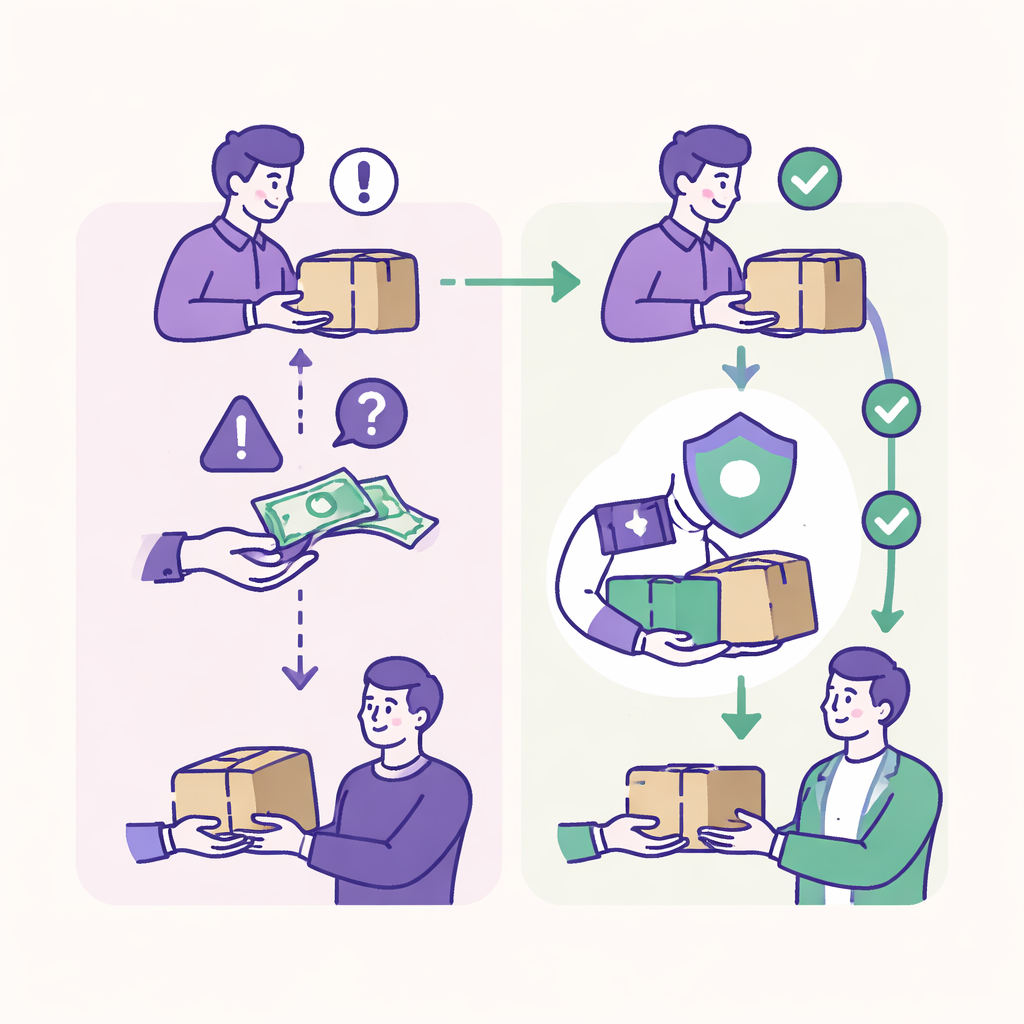
Illustration pour "Step 4: Delivery, inspection, and acceptance rules"
Common risks and how to avoid them
People researching how to use a third-party escrow service for individuals are usually trying to avoid fraud, but not all risks are obvious. Some problems come from fake platforms, while others come from poor documentation or unrealistic assumptions.
Here are the most common risks in private transactions:
- Fake websites imitating legitimate providers
- Counterparties using false names or stolen identities
- Item descriptions that are too vague to enforce
- Shipping without tracking or insurance
- Buyers failing to inspect within the allowed period
- Attempts to move payment or communication off-platform
The best prevention strategy is procedural discipline. Verify identity, document the item, use the official payment flow, and keep all communication tied to the transaction.
The table below shows how a structured third-party process compares with informal payment methods for private deals.
| Method | Documentation | Identity checks | Delivery conditions | Dispute visibility | Suitability for high-value private deals |
|---|---|---|---|---|---|
| Direct bank transfer | Low | Usually external | Informal | Limited | Weak |
| Cash in person | Very low | Manual only | Immediate only | Minimal | Only for local low-risk deals |
| Marketplace chat + direct payment | Medium | Inconsistent | Often unclear | Fragmented | Risky |
| Technical intermediation platform with secured payment flow | High | Structured | Defined in transaction | Stronger audit trail | Best for remote or high-value deals |
How buyers and sellers can each reduce risk
Buyers should:
- Verify the seller identity and item details
- Refuse rushed payment requests
- Inspect quickly and document issues
Sellers should:
- Use accurate descriptions and current photos
- Ship with tracking and insurance when needed
- Keep proof of packaging and dispatch
Both sides should keep communication inside the platform whenever possible.
How to choose the right provider for private transactions
Not every platform is designed for the same type of deal. Some are built for marketplaces, some for freelancers, and some for one-off peer-to-peer transactions between individuals.
When comparing providers, review these criteria:
- Is the process suitable for individuals, not only businesses?
- Are transaction terms easy to define clearly?
- Is the user verification process proportionate and transparent?
- Who provides the payment services?
- Is there a clear workflow for delivery confirmation and disputes?
- Are fees understandable before the transaction starts?
For many users, the practical question is not just individual escrow setup, but whether the platform reduces friction while preserving evidence. A good provider should make the transaction safer without making it impossible to complete.
TrustProtect fits this need as a technical intermediation platform for secure peer-to-peer transactions. Payment services are provided by Stripe, which is an important distinction for legal clarity and user understanding.
Questions to ask before committing
Ask these questions before opening a transaction:
- What exactly triggers transaction completion?
- How long is the inspection period?
- What evidence is accepted if there is a dispute?
- Are shipping and digital delivery both supported?
- What happens if one party becomes unresponsive?
If the answers are hard to find, the process may be too opaque for a high-value deal.
Best practices for buyers and sellers using how to use a third-party escrow service for individuals
The safest transactions are usually the least improvised. Whether you are buying a collectible watch or selling a laptop to someone in another city, consistency matters more than speed.
Follow these best practices every time:
- Use the same legal name across the transaction and payment flow
- Keep all evidence: invoices, screenshots, tracking, photos, messages
- Avoid side agreements made outside the transaction record
- Confirm deadlines for shipping and inspection in advance
- Report problems immediately, not after the deadline passes
For buyers, the goal is to verify compliance before accepting the transaction. For sellers, the goal is to prove accurate listing, proper dispatch, and timely performance.
A simple checklist before every transaction
Before starting:
- Verify provider and domain
- Verify counterparty identity
- Define terms in writing
Before payment:
- Confirm amount and transaction ID
- Review delivery and inspection rules
- Use only the official secured payment flow
After delivery:
- Inspect immediately
- Document any issue
- Confirm or report within the deadline
Questions fréquentes
How does online escrow work for individuals?
For individuals, the process usually starts with both parties agreeing on the item, price, delivery method, and inspection terms. Then the buyer completes a secured payment flow through the platform, the seller delivers, and the buyer confirms whether the transaction matches the agreed conditions.
Is using a third-party escrow service safe for private buyers and sellers?
It can be much safer than sending money directly, but only if the provider is legitimate and the process is followed correctly. Verify the domain, legal information, transaction terms, and who provides the payment services before proceeding.
What should I check before using an individual escrow setup?
Check the provider's legal identity, the exact website address, the payment provider, the dispute process, and the transaction terms. For individual escrow setup, you should also confirm the seller's identity, item description, shipping method, and inspection period.
Can I use a third-party escrow service for selling a car or expensive item?
Yes, a structured third-party process is often useful for cars, luxury goods, electronics, and collectibles. These transactions benefit from documented terms, identity checks, delivery proof, and a secured payment flow.
What are the biggest risks when using an escrow-style service online?
The biggest risks are fake websites, off-platform payment requests, vague item descriptions, and missed inspection deadlines. Most losses happen when users skip verification or move outside the official transaction workflow.
Who handles the payment services on TrustProtect?
TrustProtect is a technical intermediation platform for secure peer-to-peer transactions. Payment services are provided by Stripe through Stripe Connect Express.
What evidence should I keep during the transaction?
Keep the transaction ID, screenshots, payment confirmations, messages, shipping proof, tracking details, packaging photos, and inspection evidence. Good documentation makes it easier to prove what was agreed and what was delivered.
Conclusion
Understanding how to use a third-party escrow service for individuals comes down to one principle: structure the transaction so each step is verified, documented, and tied to clear terms. That means choosing a legitimate provider, defining the deal in writing, using the official secured payment flow, and checking delivery within the agreed timeline.
For private buyers and sellers, this approach reduces uncertainty in remote and high-value transactions. TrustProtect supports this as a technical intermediation platform, while payment services are provided by Stripe.
Quick recap:
- Verify the provider and domain before starting
- Confirm who provides the payment services
- Define the item, price, delivery, and inspection rules in writing
- Use only the official secured payment flow
- Keep proof of shipment, receipt, and inspection
- Report issues within the stated deadline
If you follow these steps, how to use a third-party escrow service for individuals becomes much less confusing and much more practical for real-world peer-to-peer deals.
Protect your next transaction with TrustProtect
Payment held by Stripe until validation. Buyer protected, seller paid upon validation.
Create a free accountReady to secure your next transaction?
TrustProtect organizes a secure journey between buyer and seller. Payment via Stripe, validation on the platform.